
Article written and published by
Dr. S.Mithra BSMS.,M.D Regd No:3149
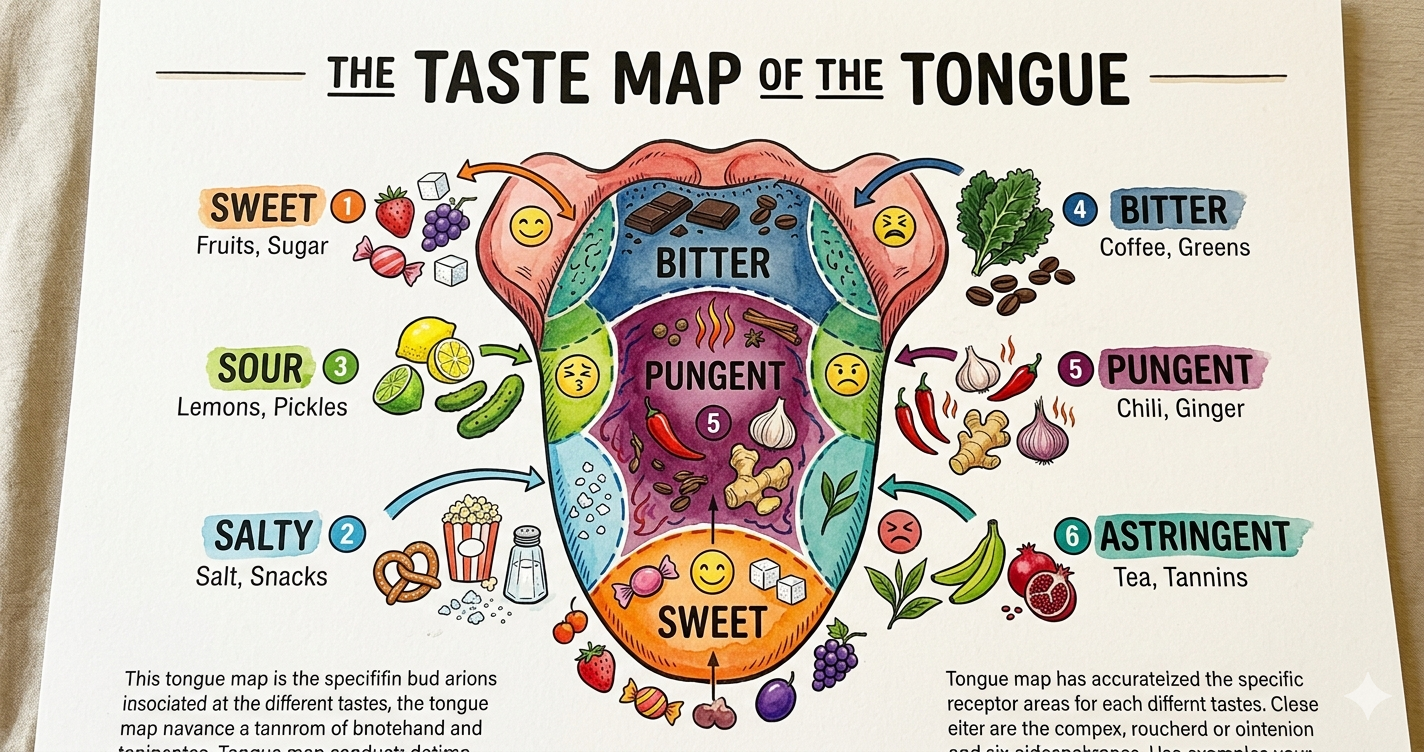
Traditional Siddha medicine proposes that the six primary tastes— “pungent, salty, sour, astringent, sweet, and bitter” —undergo progressive transformation within the body, eventually contributing to sukkilam (reproductive essence). This transformation is believed to influence vitality, temperament, and conduct. Modern taste biology, on the other hand, demonstrates that humans possess more than twenty-five taste receptor types that mediate complex biochemical and neuroendocrine responses.
This article integrates Siddha dietary theory, molecular taste receptor science, and philosophical interpretations of food-behavior relationships, while distinguishing symbolic doctrine from experimentally verified findings.
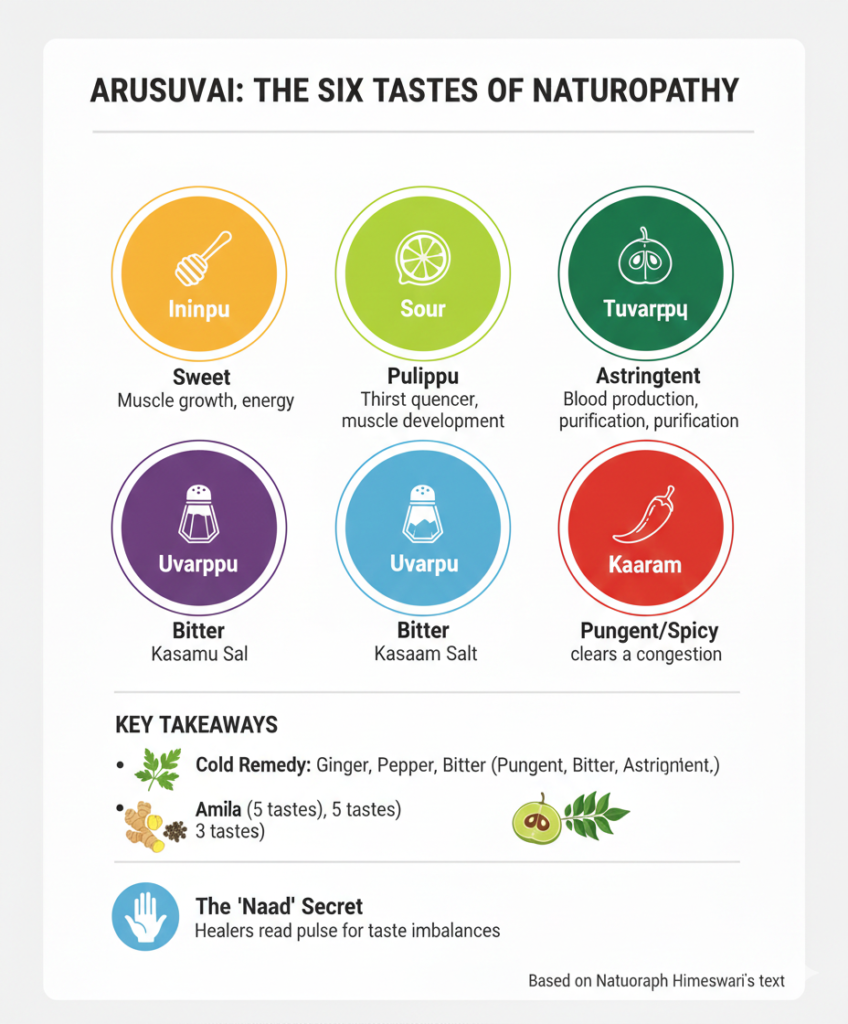
Key Takeaways
1. Taste Regulates the Body
Taste is not just flavor — it activates receptors that directly influence metabolism, hormones, and inflammation. What you eat shapes how your body functions.
2. Diet Influences the Mind
Taste signals affect neurotransmitters like dopamine and serotonin. While food does not cause crime, long-term dietary imbalance can affect mood, impulse control, and emotional stability.
3. Balance Prevents Disorder
Both Siddha principles and modern nutrition science agree: excess in any dominant taste — especially sweet and salty — disrupts physiological equilibrium. Moderation is biological wisdom.
Classical Siddha View: Taste and Transformation
Siddha physiology maintains that food, according to its dominant taste, transforms into blood and subsequently into reproductive essence. The qualitative nature of this essence is said to influence physical vigor and behavioral disposition.
A traditional interpretation states:
“The six tastes, when consumed, are transformed according to their nature into blood, and further refined into sukkilam; the quality of that essence shapes human conduct.”
In this framework, excessive intake of pungent, salty, and sour foods is believed to stimulate aggression and impulsivity, whereas balanced consumption of all six tastes fosters moderation. Sweet and bitter tastes are described as calming influences.
Although such assertions are philosophical rather than experimentally verified, they reflect a longstanding attempt to connect metabolism with moral psychology.
Modern Scientific Understanding of Taste
Contemporary research in molecular biology has reshaped our understanding of taste perception.
Charles Zuker and colleagues demonstrated that taste detection is mediated by specific receptor proteins expressed in taste cells, and that taste perception is not limited to discrete tongue regions but distributed throughout the tongue (Chandrashekar et al., 2006).
Each receptor acts as a molecular binding site. Sugars activate T1R receptors (sweet), sodium ions activate salt pathways, acids stimulate sour receptors, and amino acids such as glutamate activate umami receptors.
Importantly, taste receptor activation influences hormonal and neural pathways:
- Sweet taste can trigger insulin release even before glucose enters circulation.
- Bitter receptors are linked to defensive metabolic pathways.
- Umami stimulation enhances protein appetite and satiety signals.
Thus, taste is not merely sensory—it is metabolic signaling.
Taste Amplification and Dual Binding
Certain receptor complexes exhibit modulatory mechanisms, allowing taste enhancement. For example, monosodium glutamate (MSG) amplifies umami flavor through T1R1/T1R3 receptor pathways (Zhang et al., 2008).
This amplification principle parallels traditional caution against overstimulation of certain tastes, suggesting that intensified sensory activation may alter consumption patterns and neurochemical responses.
Diet and Behaviour: Evidence and Limits
Modern neuroscience confirms that diet influences neurotransmitters, inflammation, endocrine balance, and impulse regulation (Jacka et al., 2010). Diets high in refined sugar and sodium have been associated with metabolic stress and mood dysregulation.
However, no direct scientific evidence establishes a causal link between specific taste categories and criminal behavior. Human conduct is shaped by complex interactions among genetics, environment, psychology, and socio-economic conditions.
The Siddha claim that “food is the root cause of wrongdoing” may be interpreted metaphorically: metabolic imbalance influences neurochemical balance, which may influence emotional control.
Ethical Reflection from Tamil Literature
Tamil spiritual literature also addresses dietary restraint. Vallalar (Ramalinga Swamigal) cautioned against sensory excess:
“உண்டி மேல் விருப்பம் உண்டாயின் மோகம் உண்டாகும்; மோகம் உண்டாயின் அழிவு உண்டாகும்.”
“With craving for food comes craving for desire;
unchecked desire invites destruction.”
The Concept: He warned that gluttony (excessive craving for food) is the root cause of all other worldly desires.
The Chain Reaction: When we lose control over our tongue (taste), we lose control over our mind. This leads to “Moha” (delusion/obsessive desire), which eventually leads to the physical and mental decay of the individual.
The Solution: By practicing “Indriya Ozhukkam” (Sensory Discipline), specifically by eating simple, vegetarian food in moderate quantities, one can maintain a clear mind and a disease-free body.
Similarly, the Tirukkural (Verse 942) states:
“மிகினும் குறையினும் நோய்செய்யும் நூலோர் வளிமுதலா எண்ணிய மூன்று.”
Tamil: “அற்றால் அளவறிந்து உண்க அஃதுடம்பு பெற்றான் நெடிதுய்க்கும் ஆறு.”
English Translation: “If you ensure the previous meal is digested and eat only in measured quantity, you will live a long life in this body.”
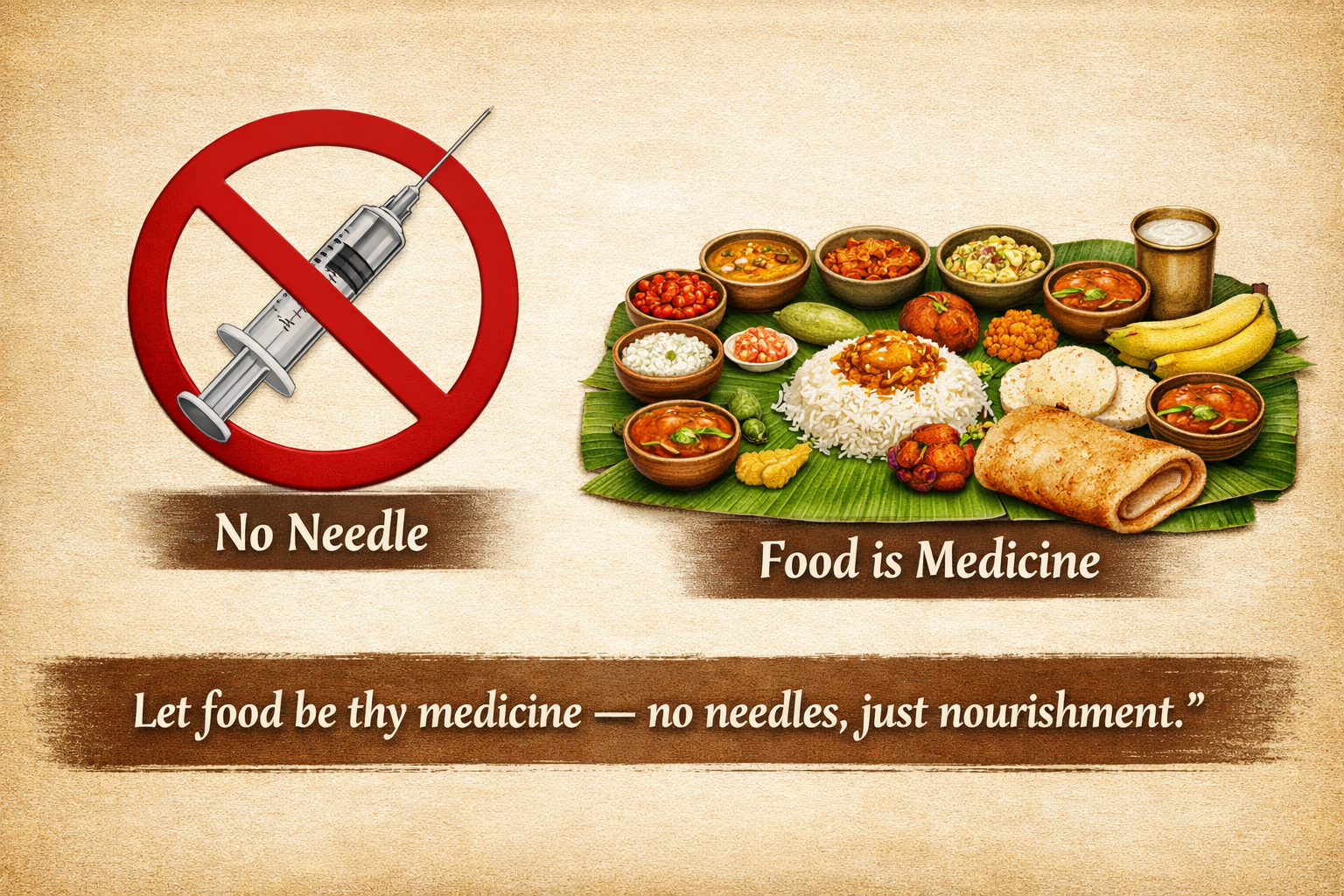
- The Logic: Your body is a machine with a specific capacity. If you provide the right fuel (Arusuvai) in the right amount (Alavu), the body heals itself.
- No Medicine Needed: Verse 942 suggests that nature provides everything we need. If we respect the “fire of digestion” (Jatharagni), the three humors (Wind, Bile, and Phlegm) remain balanced, and the concept of “medicine” becomes redundant.
These verses reflect an ethical philosophy linking appetite regulation with disciplined living.
Conclusion
Traditional Siddha medicine organizes taste into six functional categories to preserve physiological balance. Modern biology identifies more than twenty-five taste receptor mechanisms mediating complex metabolic responses.
While scientific evidence does not support deterministic claims that certain tastes directly produce criminal behavior, substantial research confirms that diet affects neurochemical and hormonal regulation, which in turn influences mood and impulse control.
Thus, ancient doctrine and modern science converge on a central insight:
Diet profoundly shapes biology, and biology influences behaviour.
References
- Chandrashekar, J., Hoon, M. A., Ryba, N. J. P., & Zuker, C. S. (2006). The receptors and cells for mammalian taste. Nature, 444(7117), 288–294. https://doi.org/10.1038/nature05401
- Zhang, F., Klebansky, B., Fine, R. M., et al. (2008). Molecular mechanism of the sweet taste enhancers. Proceedings of the National Academy of Sciences, 105(52), 20930–20934.
- Jacka, F. N., Pasco, J. A., Mykletun, A., et al. (2010). Association of Western and traditional diets with depression and anxiety in women. American Journal of Psychiatry, 167(3), 305–311.
- Yadav, R. J., & Kumar, A. (2013). Siddha system of medicine: An overview. International Journal of Research in Ayurveda and Pharmacy, 4(1), 1–5.
- Steensels, S., & Depoortere, I. (2018). Chemoreceptors in the gut. Annual Review of Physiology, 80, 117–141.