
A structured case report highlights the potential of metabolic correction beyond cholesterol numbers
By Dr. Pazhaniyappan BSMS,
Published February 06, 2026

Can Siddha Reverse Severe Hyperlipidemia and Systemic Disturbances?
For many patients, high cholesterol is just a number on a lab report. But for one 40-year-old man, it became a turning point.
A case published in the International Journal of Siddha and Ayurveda Research Publications (Chennai, February 2026) documents how structured Siddha inpatient management was associated with substantial metabolic and functional improvement in a patient suffering from severe hyperlipidemia with systemic disturbances.
When Lipid Levels Become Dangerous
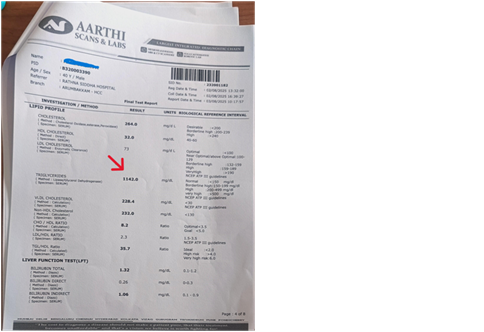
Hyperlipidemia is not merely a laboratory abnormality. When triglyceride levels exceed 1000 mg/dL, the risk of acute pancreatitis and cardiovascular events rises sharply. In this case, the patient’s laboratory profile revealed critically elevated triglycerides (1142 mg/dL), total cholesterol of 264 mg/dL, low HDL (32 mg/dL), and a TGL/HDL ratio of 35.7—indicating very high metabolic risk.
More Than a Metabolic Disorder
Alongside abnormal lipid values, the patient experienced persistent appetite loss, severe insomnia, irregular bowel movements, altered urinary frequency, generalized fatigue, and increasing psychological stress. Despite dietary modifications, symptoms progressed. The biochemical imbalance was accompanied by systemic functional decline, suggesting deeper metabolic dysregulation.
He was admitted for structured Siddha inpatient management to address systemic correction rather than isolated lipid suppression.
Siddha Perspective: A Systemic Approach
In Siddha understanding, hyperlipidemia correlates with excess ‘Meda’ (lipid accumulation) and falls under disorders arising from metabolic stagnation. The therapeutic objectives included:
1. Digestive fire correction
2. Humoral balance restoration
3. Detoxification
4. Functional normalization
The approach emphasized systemic correction rather than targeting cholesterol alone.
Therapeutic Intervention
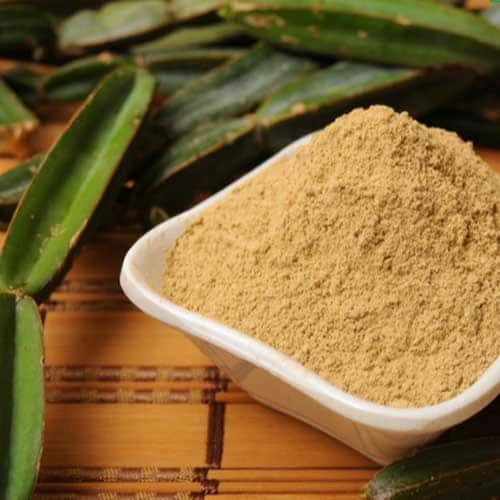
Initial detoxification (Days 1–3) included Thiripalakasayam for gut cleansing and Nilavahal Chooranam for metabolic detoxification support. This was followed by phased internal medicines, dietary regulation (Pathiyam), and continuous inpatient monitoring.
External Therapies
1. Banana Leaf Bath (Vaazhai Ilai )

The body was covered with fresh banana leaves followed by controlled early morning sunlight exposure. This therapy is traditionally indicated for Vatha–Kapha imbalance and is believed to promote circulation, thermoregulation, and metabolic activation.
2. Herbal Leaf Poultice Therapy (meethi seehichai)


The patients asked to keep foot and press continuously on the Prepared grinded paste of using neem and bitter gourd leaves, this therapy aims to reduce inflammatory accumulation, clear metabolic obstruction, and support systemic detoxification.
What Changed?
Following structured Siddha management, measurable improvements were observed.
Laboratory Changes
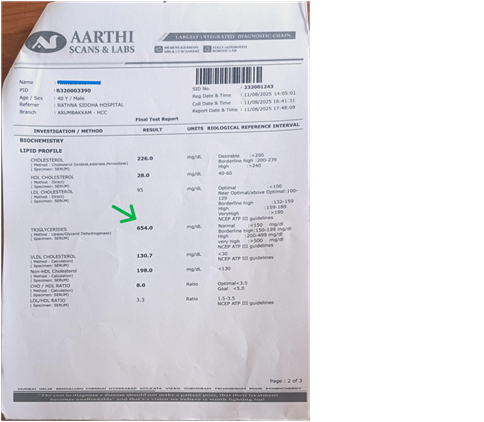
- Triglycerides: reduced from 1142 mg/dL to 654 mg/dL
- Total Cholesterol: reduced from 264 mg/dL to 226 mg/dL
- Risk Ratio: significantly decreased
While triglycerides remained elevated, the patient moved away from immediate high-risk danger levels.
Functional Improvements
More importantly:
- Appetite returned
- Sleep normalized
- Bowel and urinary patterns stabilized
- Fatigue reduced significantly
- Psychological stress diminished
The patient reported improved daily functioning and quality of life.
Why This Case Matters
This report suggests that severe hyperlipidemia may present as a systemic functional disorder — not merely a biochemical abnormality.
When digestion weakens and metabolic balance declines, lipid disturbances may follow. By addressing the root functional disturbance, improvement was seen in both laboratory parameters and subjective well-being.
However, as a single case, it cannot establish definitive clinical proof. Larger controlled studies are necessary to confirm reproducibility and long-term cardiovascular outcomes.
What This Means for People Living with High Cholesterol
If you are managing hyperlipidemia, this case offers several practical insights:
- Do not ignore symptoms like insomnia, appetite loss, or digestive irregularity — they may signal deeper metabolic imbalance.
- Lipid control may benefit from comprehensive metabolic correction, not just numerical reduction.
- Structured supervision, regulated diet, and monitored detoxification can play supportive roles.
- Integrative approaches should always be coordinated with regular medical monitoring and laboratory follow-up.
The broader message is simple:
Metabolic health is not only about lowering numbers — it is about restoring balance.
For patients whose cholesterol imbalance affects both body and daily life, structured Siddha inpatient care may offer a complementary pathway worth exploring — alongside standard cardiovascular risk monitoring.