
Dr. Pazhaniyappan, BSMS
Published by Rathna Siddha & Herbal Research Centre, Chennai, Tamil Nadu, India
For the patient and her family, the illness did not begin with cancer.
It began with fever.
Every night, the fever would slowly rise. Chills shook her body. Sleep disappeared almost completely. Her mother stayed awake beside her, placing wet cloth on her forehead while silently praying for the fever to reduce before dawn.
At first, everyone believed it was a simple infection.
A temporary illness.
A seasonal fever.
Nothing dangerous.
But the body was already showing early warning signs of a deeper systemic disease.
As days passed, the symptoms worsened:
- persistent night-time fever,
- severe chills,
- disturbed sleep,
- headache,
- body weakness,
- loss of appetite,
- fatigue,
- emotional distress.
The patient slowly became physically and mentally exhausted. Even walking around the house became difficult. Fear silently entered the household.
Repeated consultations and investigations followed. But the uncertainty became another illness for the family.
Then the blood reports started revealing something serious.
Blood Test Evidence of Severe Systemic Disease
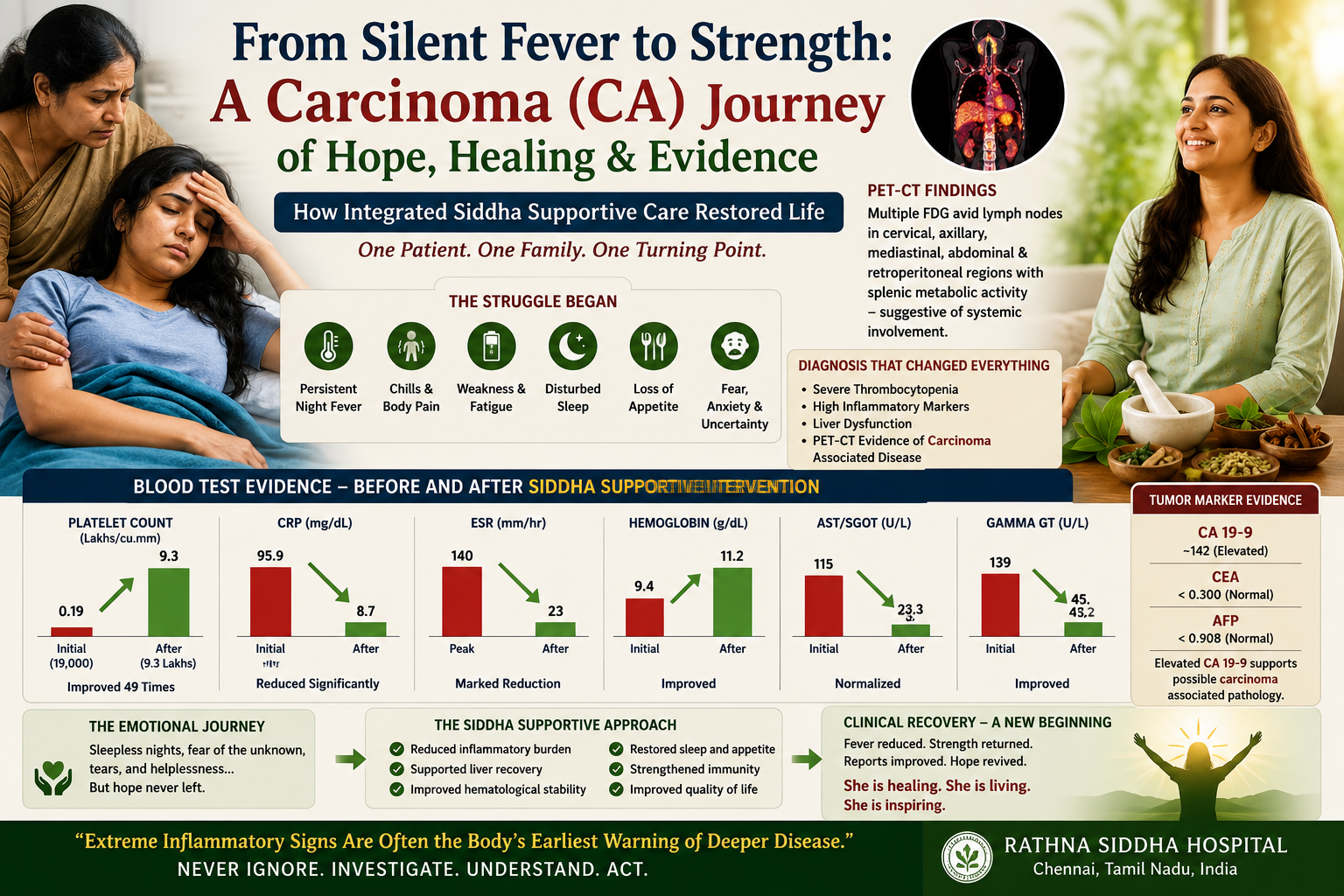
Severe Platelet Suppression
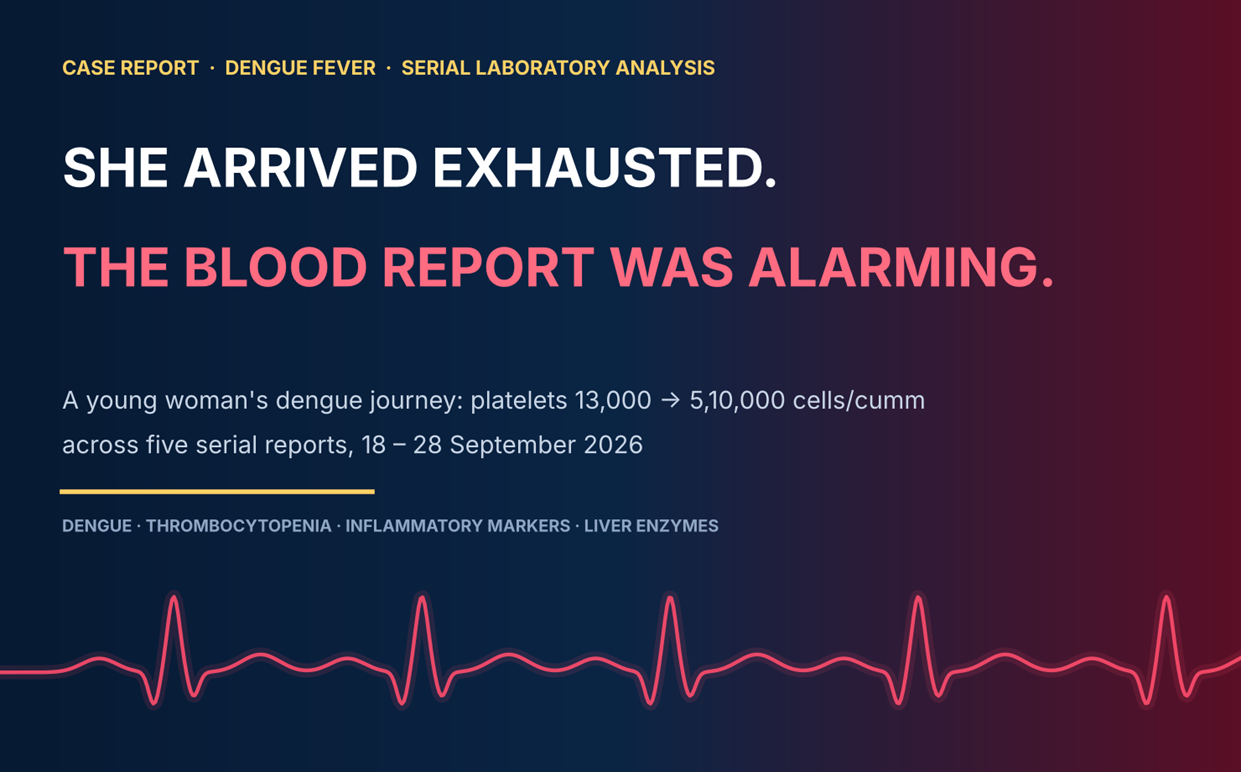
One of the most alarming findings was the critically low platelet count.
Initial █ 19,000
08/12 █ 20,000
18/12 ██ 34,000
19/12 ████ 66,000
20/12 ████████████ 2.10 L
25/12 █████████████ 2.18 L
19/01 █████████████████████ 4.51 L
26/01 ███████████████████████████████████ 9.3 L
The family feared bleeding complications and worsening disease progression. However, during follow-up, gradual hematological recovery was observed.
This became one of the first moments of hope for the patient’s family.
CRP and Severe Inflammatory Activation
| Parameter | Value |
| CRP | 95.9 mg/dL ↑↑ |
A CRP value this high reflected severe systemic inflammatory activation occurring inside the body.
The fever was no longer behaving like a simple infection.
The body was experiencing:
- inflammatory cytokine activation,
- immune stress,
- systemic inflammatory burden.
ESR Inflammatory Pattern
| Date | ESR |
| Initial | 31 |
| 18/12 | 20 |
| 19/12 | 140 ↑↑ |
| 20/12 | 65 |
| 25/12 | 45 |
| 26/01 | 23 |
The sudden ESR surge to 140 indicated severe inflammatory escalation. Later gradual reduction reflected progressive stabilization.
Liver Dysfunction Evidence
AST/SGOT Recovery Trend
| Date | Value |
| 07/12 | 115 ↑ |
| 12/12 | 108 ↑ |
| 20/12 | 32.9 |
| 19/01 | 23.3 |
Graphical Representation
07/12 ███████████████████████ 115
12/12 █████████████████████ 108
20/12 ██████ 32.9
19/01 ████ 23.3
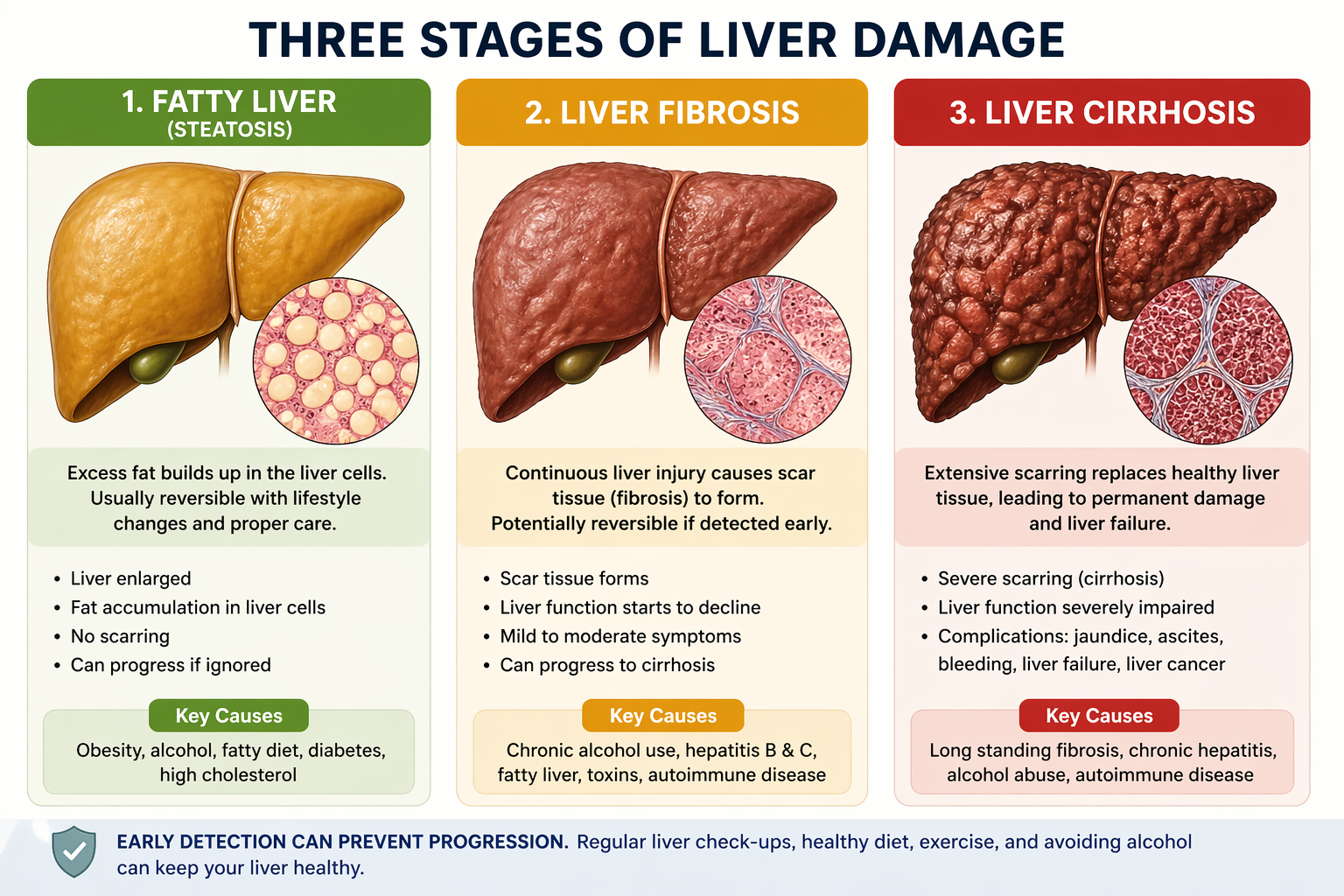
Severe inflammatory stress had also affected liver metabolism initially. Progressive reduction demonstrated systemic recovery.
PET-CT Findings Changed Everything
Further investigations revealed:
- cervical lymphadenopathy,
- bilateral axillary lymph node enlargement,
- mediastinal lymph node involvement,
- abdominal lymphadenopathy,
- retroperitoneal lymph node activation,
- splenic metabolic activity.
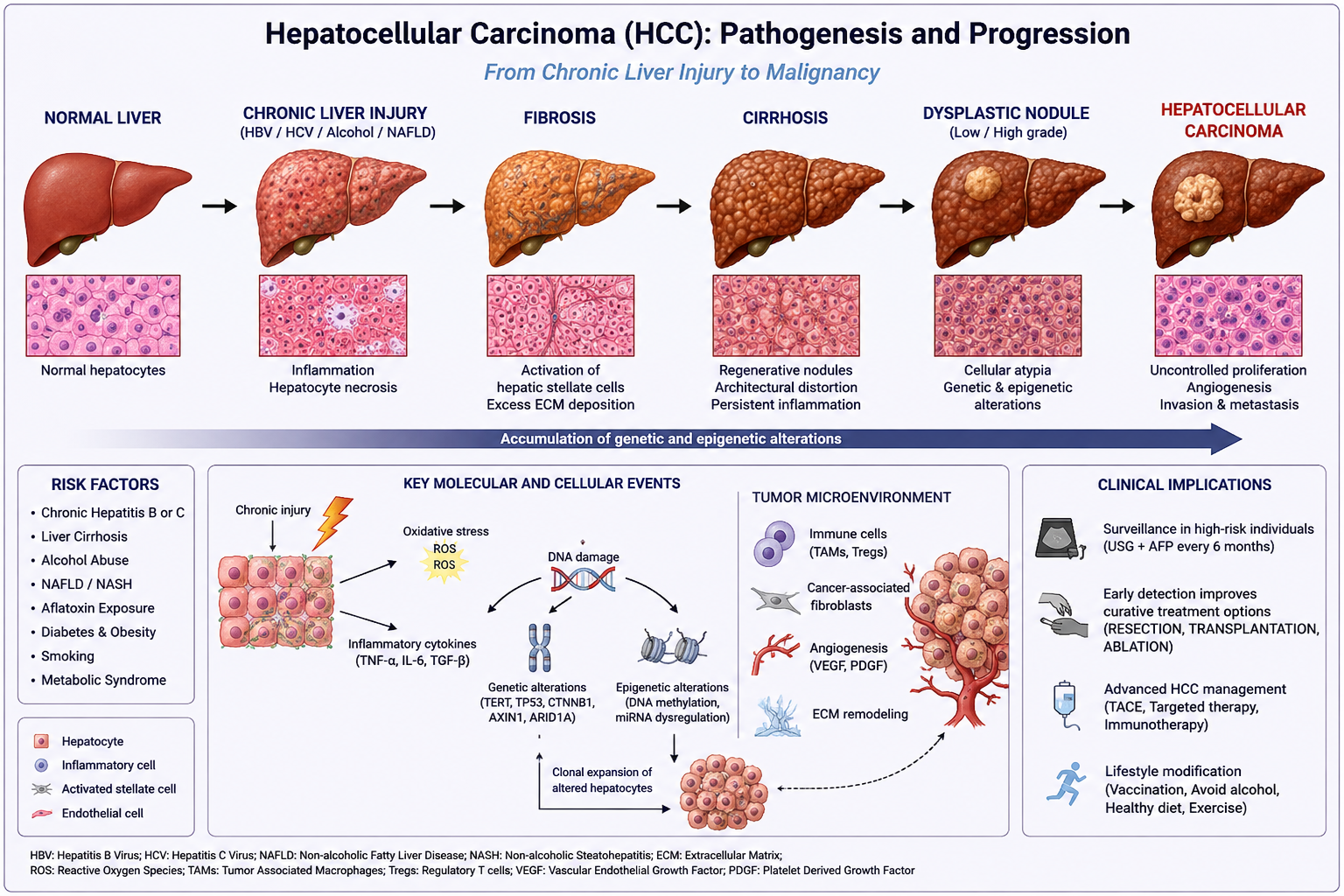
The possibility of carcinoma-associated inflammatory disease entered the discussion.
For the family, this moment was emotionally devastating.
The word “carcinoma” brought fear, uncertainty, and sleepless nights into the household.
Emotional Collapse Behind the Disease
The patient was not suffering from laboratory abnormalities alone.
She was suffering from:
- fear,
- emotional exhaustion,
- anxiety,
- sleeplessness,
- uncertainty about survival.
Her family members became emotionally drained watching her deteriorate day after day.
At one stage, the patient feared sleeping at night because fever and chills had become psychologically traumatic.
Admission at Rathna Siddha Hospital
By the time she arrived at Rathna Siddha Hospital, she was physically weak and emotionally exhausted.
Integrated Siddha supportive management was initiated focusing on:
- inflammatory reduction,
- digestive stabilization,
- constitutional strengthening,
- liver support,
- sleep restoration,
- systemic recovery,
- immune balancing.
The approach focused not only on reports, but also on restoring the patient’s overall physiological and emotional stability.
Gradual Clinical Improvement
Recovery was not immediate.
But over the following weeks, small changes slowly appeared.
The fever intensity reduced.
Night chills became less severe.
Sleep gradually improved.
Appetite slowly returned.
The patient became emotionally calmer.
At the same time, blood reports also started improving.
Platelet counts increased dramatically.
Inflammatory markers reduced.
Liver enzyme abnormalities improved progressively.
The family, who once feared every night, slowly began to regain hope again.
Clinical Interpretation
This case demonstrated a severe systemic inflammatory-oncological convergence pattern involving:
- inflammatory cytokine activation,
- thrombocytopenia,
- hepatic stress,
- constitutional deterioration,
- generalized lymphatic activation,
- metabolic inflammatory burden.
The most important hidden clinical lesson was that:
Persistent fever with blood abnormalities should never be clinically underestimated.
The illness was not merely “fever.”
It was the body’s early biological warning signal of deeper systemic disease.
Conclusion
This evidence-based clinical case demonstrated that persistent nocturnal fever associated with generalized lymphadenopathy, severe thrombocytopenia, elevated CRP, ESR surge, and liver dysfunction may indicate severe underlying systemic disease including carcinoma-associated inflammatory activation.
Serial blood investigations clearly demonstrated:
- hematological suppression initially,
- severe inflammatory burden,
- progressive stabilization following integrated Siddha supportive care.
More importantly, the patient experienced emotional recovery alongside physical improvement.
For the family, healing truly began not when the reports changed —
but when she finally slept peacefully after many nights of fear.
Rathna Siddha & Herbal Research Centre
Chennai, Tamil Nadu, India