
By Dr. Pazhaniyappan BSMS,
Published June 29, 2026
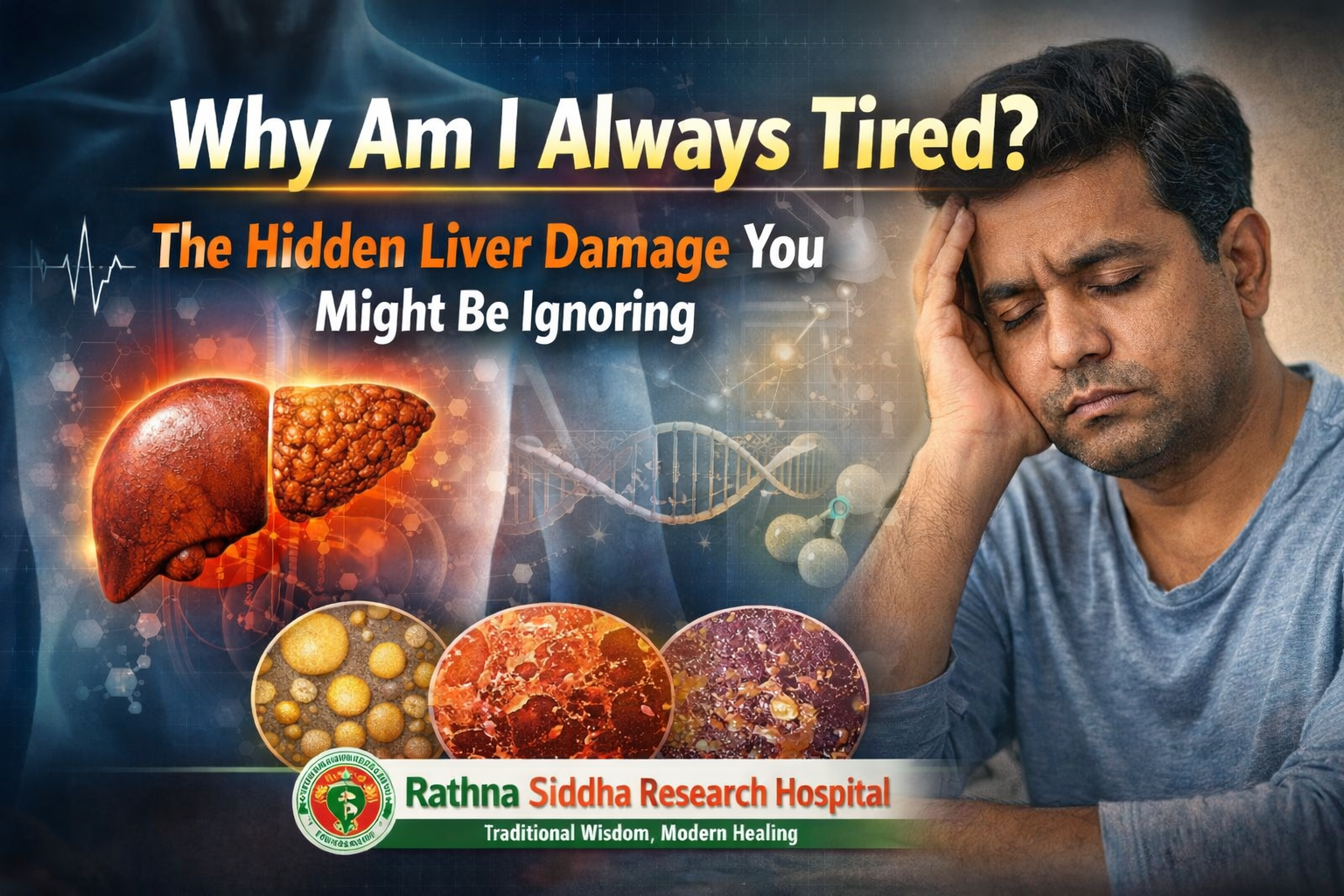
He was 46 years old, working long hours, eating irregularly, and rarely paying attention to his health. For months, he felt an unexplained tiredness. It was not severe enough to stop his routine, but it never went away. Gradually, he noticed a mild heaviness in his abdomen and a reduced appetite. There was no sharp pain, no alarming symptom—just a slow decline in how his body felt.
When he finally visited Rathna Siddha Research Hospital, the clinical team observed something important. His symptoms were mild, but persistent. This pattern often indicates early internal changes rather than a temporary illness. Investigations were advised, and the results revealed a deeper issue. His liver enzymes were slightly elevated, imaging showed fatty changes, and a FibroScan confirmed Stage F2 fibrosis.
This was the turning point. The disease had started, but it had not yet reached a stage of no return.
What Exactly Is Happening Inside the Liver?
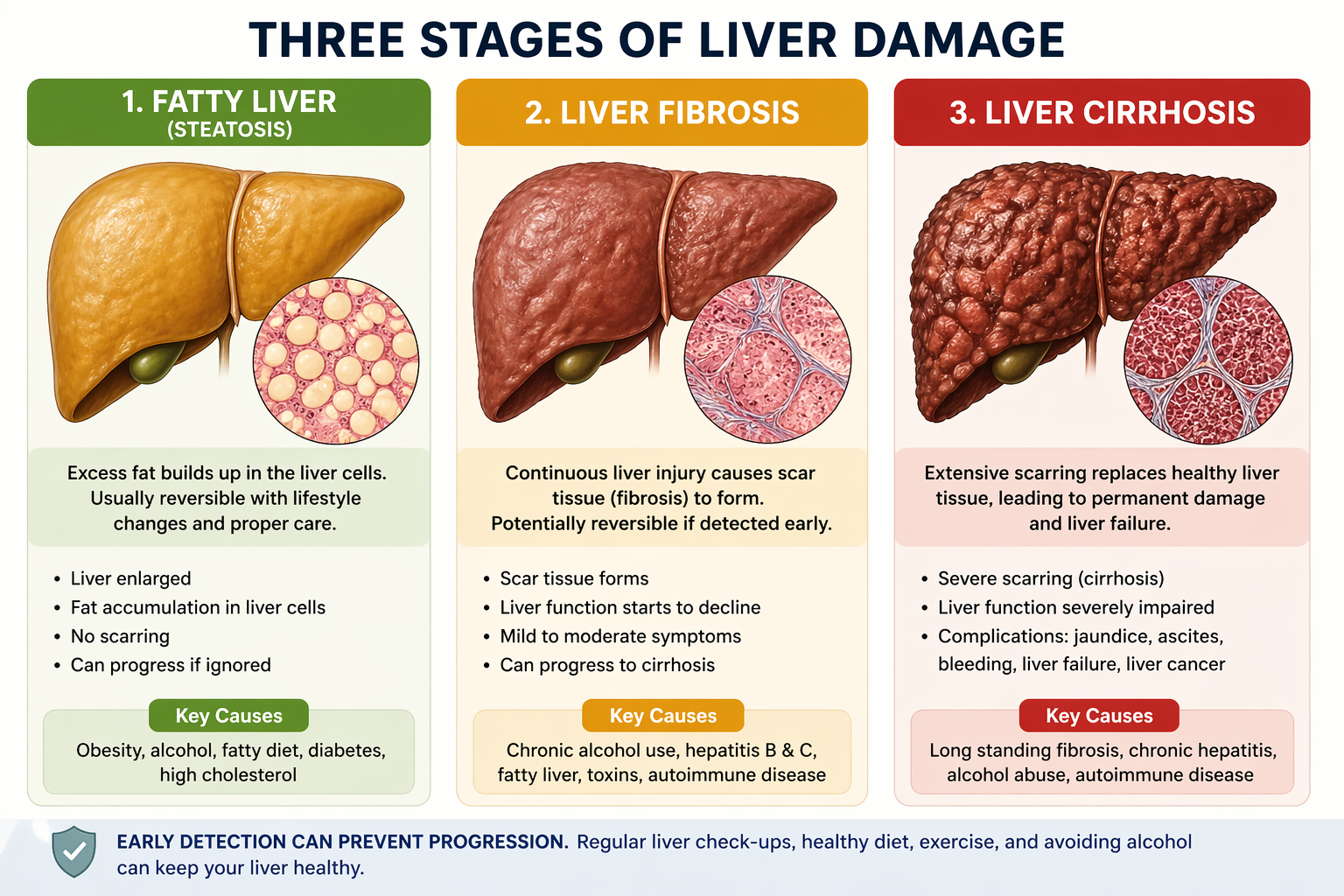
To understand liver fibrosis, imagine the liver as a soft sponge that allows blood to flow smoothly through it. When the liver faces repeated injury—whether from fat accumulation, alcohol, infections, or metabolic imbalance—it tries to repair itself. But this repair process is not perfect.
Instead of rebuilding normal tissue, the liver begins to deposit scar tissue. This scar tissue is made of strong fibers like collagen, which are meant to heal wounds. However, when this process continues for a long time, the scar tissue starts replacing healthy liver cells.
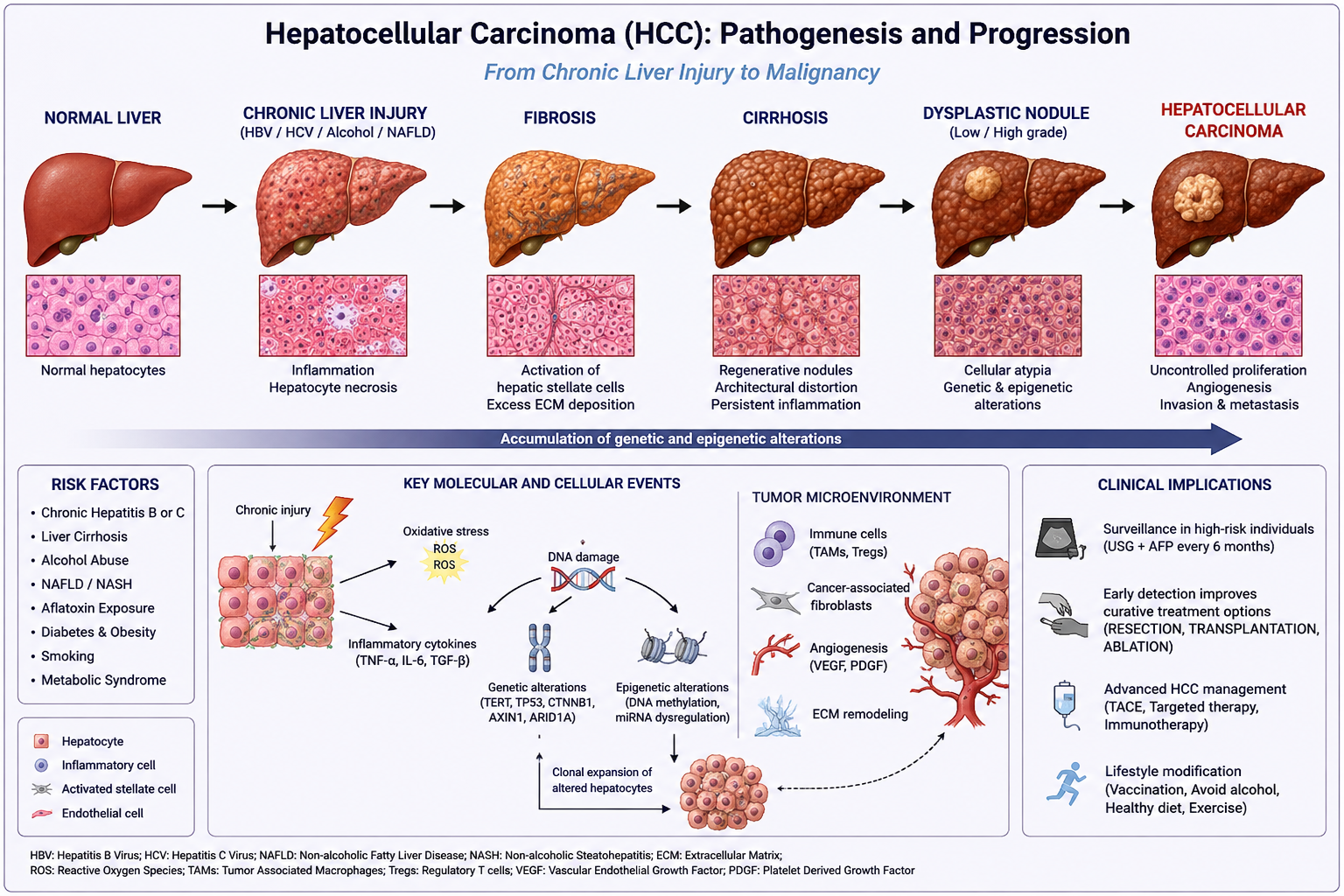
Scientifically, this process is driven by specialized cells called hepatic stellate cells. In a healthy liver, these cells are inactive. But during injury, they become activated by inflammatory signals and start producing collagen continuously. At the same time, the tiny blood channels in the liver lose their flexibility, blood flow becomes restricted, and pressure inside the liver begins to rise.
This creates a harmful cycle where inflammation leads to scarring, and scarring further worsens liver function.
A Deeper Scientific Insight: Why Fibrosis Progresses
Liver fibrosis is not caused by one single factor. It is the result of multiple processes happening together. Inflammation plays a major role, where immune cells release chemical signals that keep the liver in a constant state of injury. Fat accumulation in liver cells adds to the stress, producing toxic substances that further damage tissues.
At the microscopic level, even the structure of liver blood vessels changes. They lose their natural pores, a process called capillarization, which reduces the exchange of nutrients and oxygen. Over time, this leads to increased pressure inside the liver, known as portal hypertension, which is responsible for many serious complications in advanced disease.
But one of the most important scientific discoveries in recent years is this:
Liver fibrosis, especially in its early stages, is reversible.
If the cause of injury is removed and inflammation is controlled, the liver has the ability to break down scar tissue and restore its function.
Rathna Siddha Research Hospital Perspective
At Rathna Siddha Research Hospital, the same condition was evaluated not just through reports, but through a broader understanding of body balance. The patient showed clear signs of disturbed Pitham, indicating internal heat and inflammation, along with Kabam imbalance, suggesting metabolic accumulation and sluggish processing.
Interestingly, this traditional interpretation closely aligns with modern science. What Siddha describes as heat and stagnation corresponds to inflammation and fat accumulation in biomedical terms. This parallel understanding allows treatment to focus not only on the visible disease but also on the underlying imbalance.
The treatment approach was designed to reduce metabolic stress, control inflammation, and support the liver’s natural regenerative capacity. Over time, the patient experienced a steady improvement. His energy levels increased, appetite returned, and follow-up tests showed stabilization of liver function. Most importantly, the progression of fibrosis was stopped.
Why Early Detection Changes Everything
Liver fibrosis does not produce dramatic symptoms in the beginning. Many patients continue their daily life without realizing that slow damage is happening inside. By the time symptoms become obvious, the disease may have already progressed to cirrhosis.
Scientific evidence clearly shows that patients diagnosed in early stages, like F1 or F2, have a high chance of reversing the condition if proper treatment and lifestyle correction are followed. However, once the liver becomes severely scarred, complete reversal becomes difficult.
This makes early diagnosis not just important—but life-saving.
Frequently Asked Questions (FAQs)
Can liver fibrosis be completely cured?
In the early stages, yes. Scientific studies confirm that if the underlying cause is treated and inflammation is reduced, the liver can heal and even reverse fibrosis. However, in advanced stages like cirrhosis, complete reversal becomes much harder.
Is liver fibrosis the same as cirrhosis?
No. Fibrosis is the early stage where scar tissue begins to form. Cirrhosis is the advanced stage where the liver structure is permanently damaged and its function is severely affected.
What are the early warning signs of liver fibrosis?
Most people experience very mild symptoms such as fatigue, loss of appetite, abdominal heaviness, or slight weight changes. These signs are often ignored, which is why the disease progresses silently.
How is liver fibrosis diagnosed?
Doctors use blood tests, ultrasound, and non-invasive scans like FibroScan to measure liver stiffness. In some cases, a biopsy may be required, but modern methods often avoid the need for invasive testing.
Can lifestyle changes really make a difference?
Yes, they play a major role. Reducing fatty food, avoiding alcohol, maintaining a healthy weight, and controlling diabetes or cholesterol can significantly slow down or even reverse liver damage.
For those experiencing subtle symptoms or seeking a deeper, science-based yet traditional approach, Rathna Siddha Research Hospital offers integrated evaluation and care focused on both the cause and the cure.
Siddhar Thanikasalam
Chief Siddha Physician
Rathna Siddha Hospital
No. 8/18, 23rd Street, Jai Nagar, Arumbakkam, Chennai – 600106, India
Phone: +91 9962812345, 9092888888