
Corresponding Author: Dr. Pazhaniyappan, BSMS · Rathna Siddha Hospital, Tamil Nadu, India
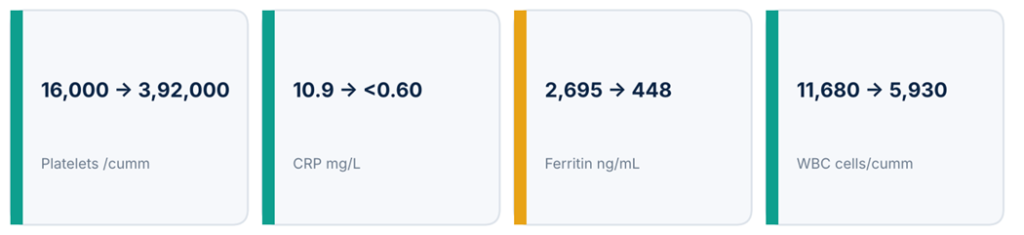
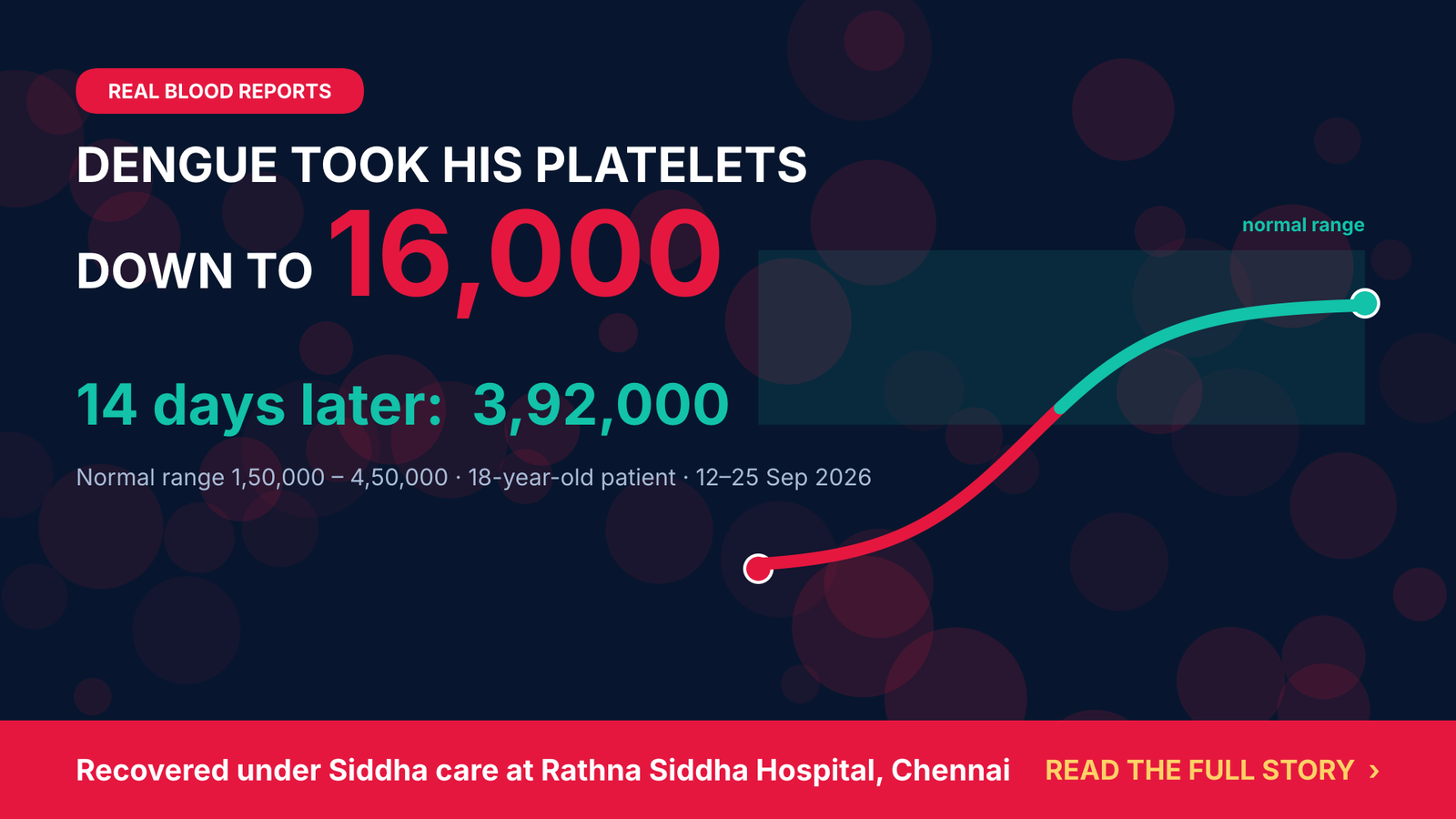
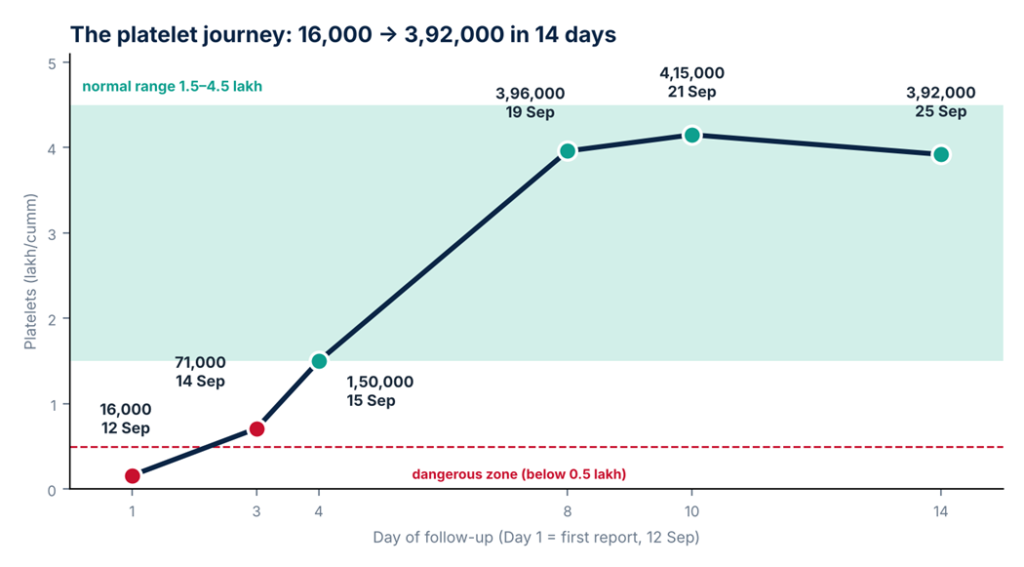
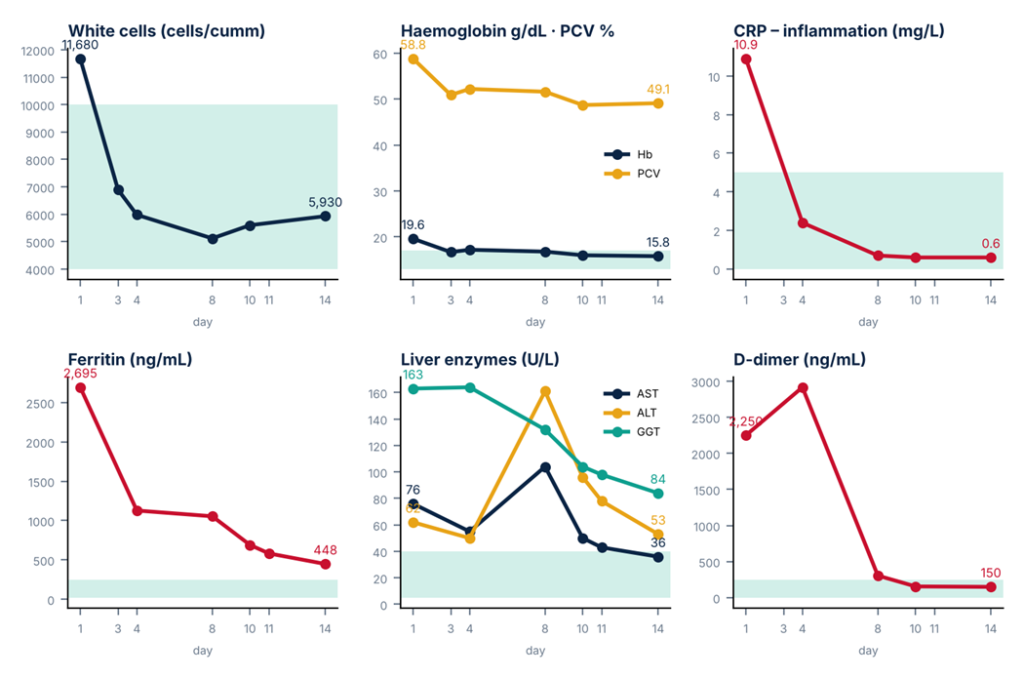
| THE STORY IN SEVEN BLOOD REPORTS The villain: on 12 Sep his platelets were 0.16 lakh/cumm (16,000) — about one-tenth of the lowest normal value — with D-dimer 2,250 and ferritin 2,695. The turn: 71,000 on 14 Sep, then 1,50,000 on 15 Sep — the lower limit of normal reached on Day 4 of the record. The victory: 3,96,000 on 19 Sep, 4,15,000 on 21 Sep and 3,92,000 on 25 Sep, with CRP below 0.60 and D-dimer below 150. Still on watch: ferritin (448) and liver enzymes (ALT 53, GGT 84) were still above range on 25 Sep, but falling. |
PROLOGUE
The Characters of This Story
| THE VILLAIN Dengue thrombocytopenia A viral fever that drives platelets down, thickens the blood, fires up inflammation and strains the liver. On 12 Sep it had taken Nirmal’s platelets to 16,000. | THE ONE IN DANGER 18 year young boy Fever, extreme tiredness, headache, cough, nausea, loss of appetite and abdominal pain with every breath. Admitted to intensive care at a government hospital. | THE HERO Siddha care at Rathna Siddha Hospital Kayakalpa Herbal Juice before transfer, then supervised Siddha treatment and dietary care in Chennai — with blood tests every few days to show where the fight stood. |
This is the day-by-day story of one patient told through his own blood tests. Seven laboratory reports from Aarthi Scans & Labs (12, 14, 15, 19, 21, 22 and 25 September 2026) are the proof; each chapter below shows what the page said, in numbers the reader can check against the original report pages reproduced at the end.
Dates are counted from the first report in the file (12 September = Day 1). Ranges quoted are those printed on each report for an adult male.
CHAPTER 1 · THE VILLAIN STRIKES
The Night the Count Fell to 16,000
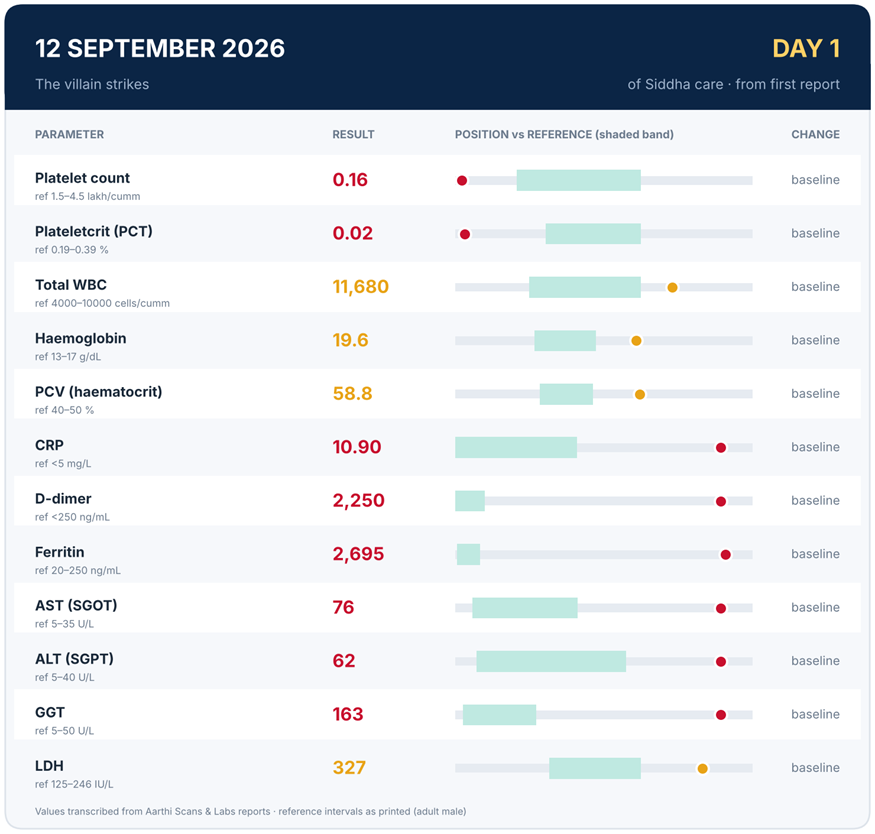
DAY 1 · 12 September 2026
It began, as dengue so often does, with a fever that would not leave. Then came a tiredness so heavy that even sitting up was an effort, a headache, a cough, nausea and no wish to eat. The pain in his abdomen was the worst — it hurt every time he breathed. The young boy, just eighteen, had become the quiet centre of a frightened family.
By the time the first report in this file was drawn, a government hospital had already admitted him to intensive care, and the family had been advised to seek further help. Then came the decision that changed the course of the story: the boy was referred to Rathna Siddha Hospital in Chennai. Before the ambulance moved him, he was given Kayakalpa Herbal Juice — the first gesture of Siddha care, offered before the journey had even begun.
The blood report that evening told the villain’s story plainly.
Proof from the blood report
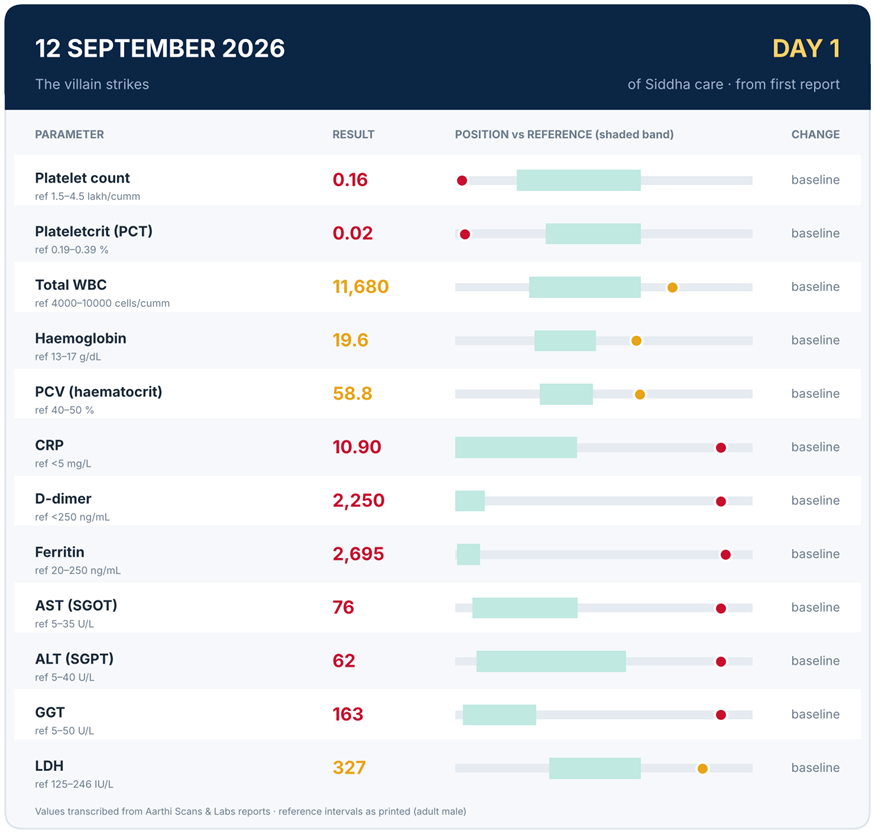
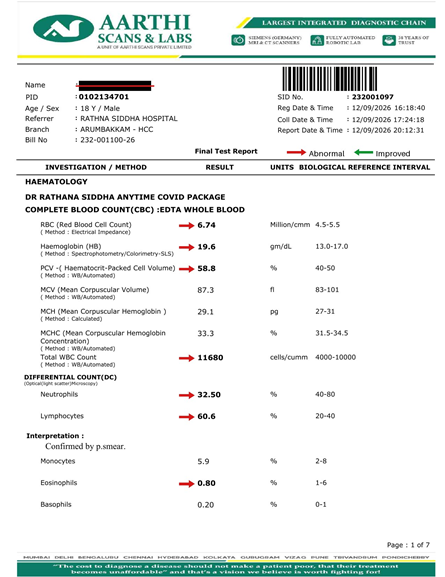
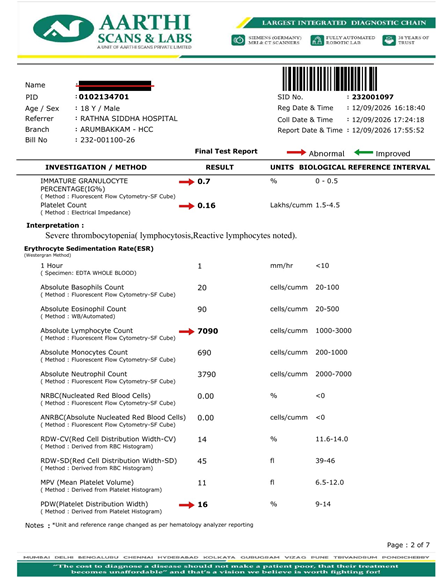
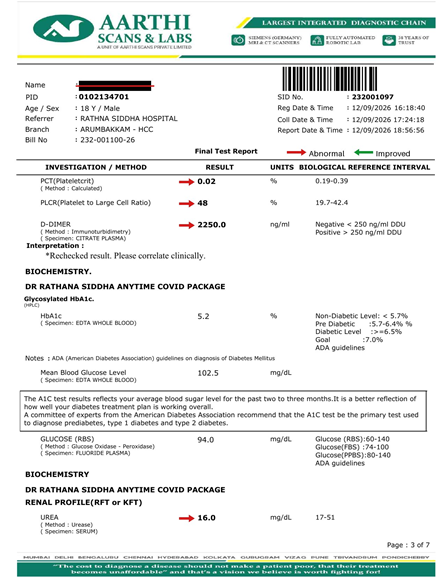
- Platelets 0.16 lakh/cumm (16,000) — against a normal 1.5–4.5 lakh; the report itself reads “Severe thrombocytopenia”. Plateletcrit was 0.02 % (normal 0.19–0.39).
- Blood thickened: haemoglobin 19.6 and PCV 58.8 % — well above the printed ranges (13–17 g/dL; 40–50 %) — the haemoconcentration pattern doctors watch for in dengue.
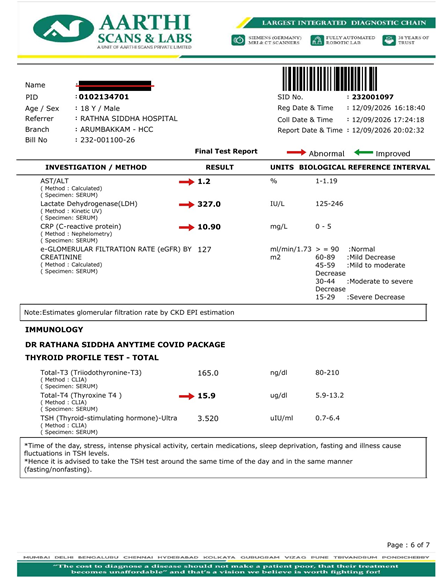
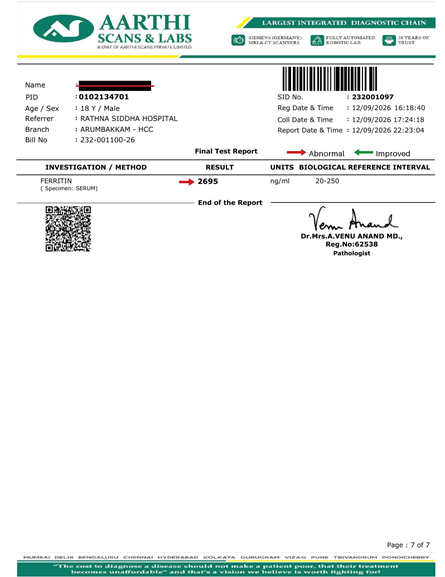
- Inflammation and clotting activity raised — CRP 10.9 mg/L (normal 0–5), D-dimer 2,250 ng/mL (normal <250), ferritin 2,695 ng/mL (normal 20–250), LDH 327 IU/L.
- White cells 11,680 with 60.6 % lymphocytes — reactive lymphocytes were noted on the smear — the immune system on full alert.
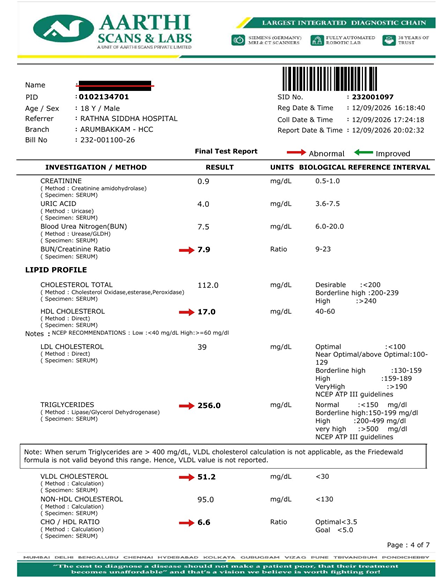
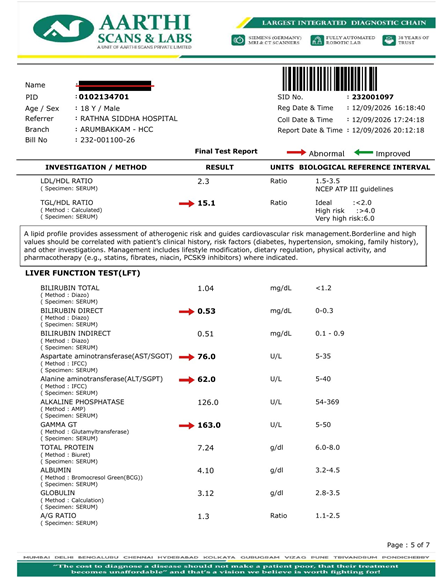
- Liver already under strain — AST 76, ALT 62, GGT 163 U/L; HDL cholesterol only 17 mg/dL with triglycerides 256.
CHAPTER 2 · THE FIRST COUNTER-ATTACK
The Role of Siddha Treatment and Clinical Monitoring
Treatment was initiated at Rathna Siddha Hospital, and the patient’s clinical condition and laboratory parameters were monitored very carefully.
KAYKALPA HERBAL JUICE
The Kaykalpa herbal juice was given to detox and to rejuvenate entire body system. It was given 4 times in a day.
Vettri tablets:
The herbs in the Vettri tablet are mostly traditional Siddha fever herbs, and each has a different role. Nilavembu (Andrographis paniculata) is the main one for fever and body pain. Vellaruku, Parpadagam and Kandankathiri add to the fever-reducing and anti-inflammatory effect, and Adathodai helps when cough or chest congestion comes with the fever. Keezhanelli, Seenthil and Amukkara are used to protect the liver and rebuild strength after illness. Sukku and Karumilagu help digestion, nausea and absorption.
Food as medicine:
Rathna Siddha Hospital gives its patients a weekly Siddha diet plan (Unavu Attavanai) of five light, easy-to-digest meals a day, built from traditional South Indian foods. It replaces polished white rice with millets (barnyard, foxtail, pearl and kodo) and with black and red rice, which supply fibre, minerals and antioxidant polyphenols. Each day includes a sprouted legume, such as horse gram, black gram, cowpea, chickpea or green gram, for plant protein, and a medicinal green at lunch, such as Ponnanganni, Manathakkali, Vallarai, amaranth, spinach or drumstick leaf. Light vegetables like ridge gourd, bottle gourd, ash gourd, banana stem and banana flower add fibre, and the evening soups are gentle on the stomach. Fermented foods like idli, dosa and adai are included to help nutrient absorption and gut health. In Siddha terms, the plan keeps the three humours (Mukkutram) balanced and protects digestive fire (Agni), so the body can use its nutrition to recover without being burdened by heavy food.
71,000 — the First Light
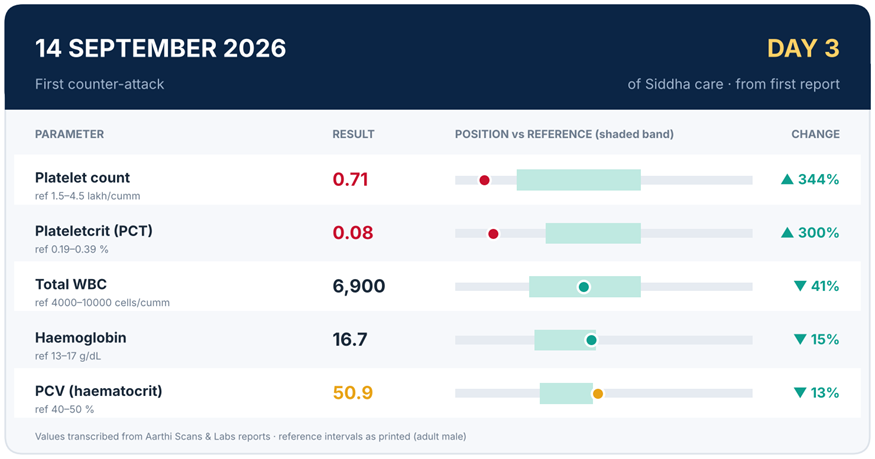
DAY 3 · 14 September 2026
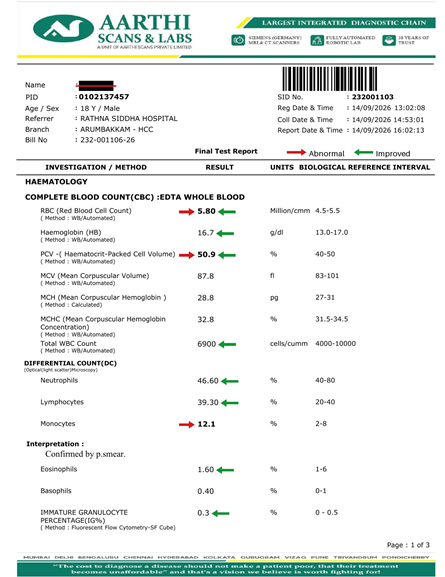
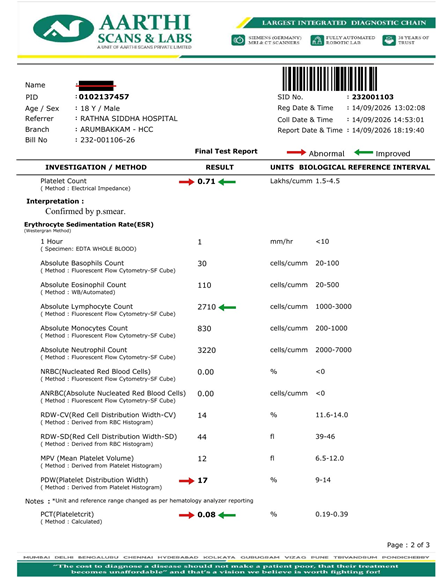
Two days passed under supervised Siddha care at Rathna Siddha Hospital. For a family counting hours, they were long ones. The second report was a smaller blood test — a complete blood count with platelets — but it carried the news everyone was waiting for.
Proof from the blood report
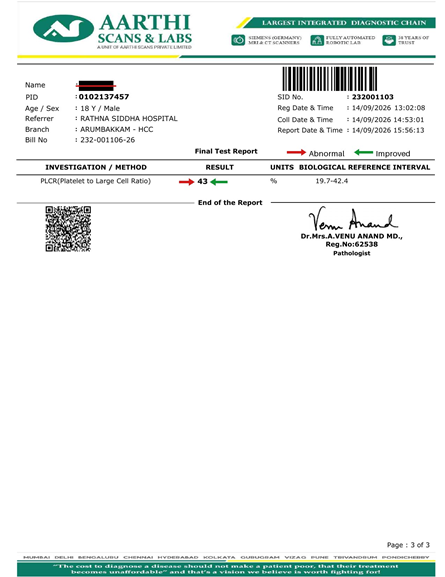
- Platelets 0.71 lakh/cumm (71,000) — up from 16,000 — about 4.4 times higher in two days. Plateletcrit rose from 0.02 % to 0.08 %.
- Blood thickness easing — haemoglobin 19.6 → 16.7 g/dL and PCV 58.8 → 50.9 %, now almost back in the 40–50 % range.
- White cells settled — 11,680 → 6,900 cells/cumm, back inside the normal range.
CHAPTER 3 · THE LINE IS CROSSED
1,50,000 — Back to the Safe Side
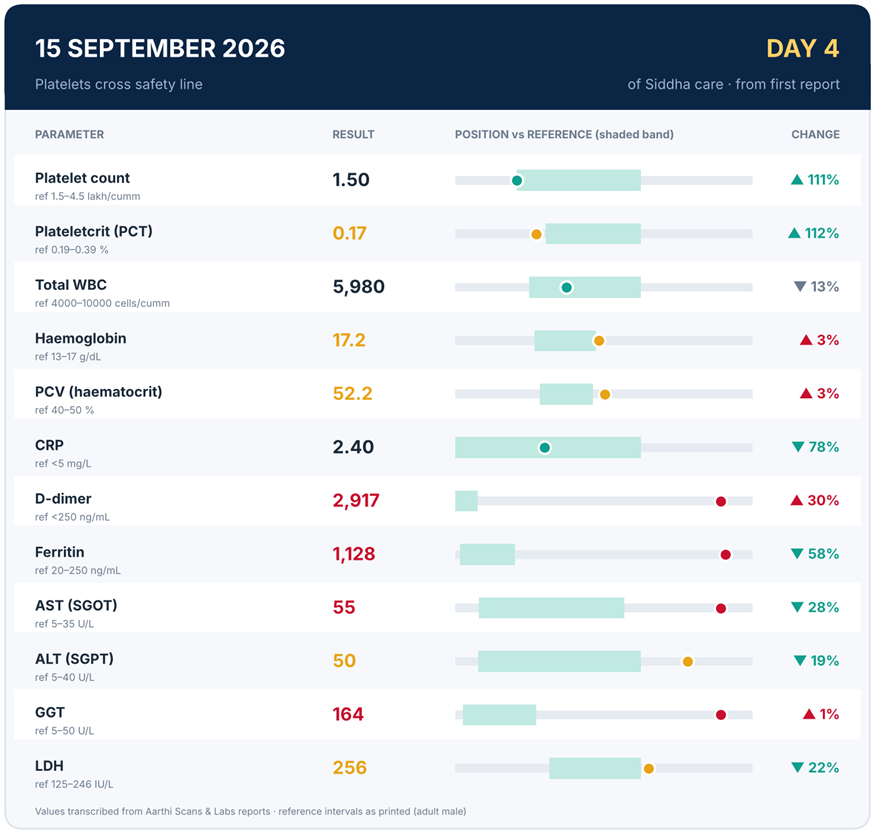
DAY 4 · 15 September 2026
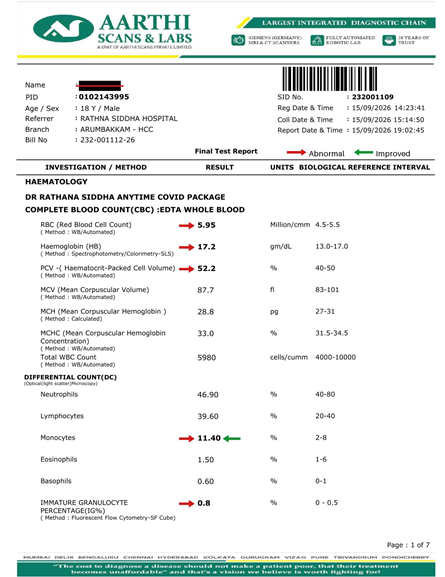
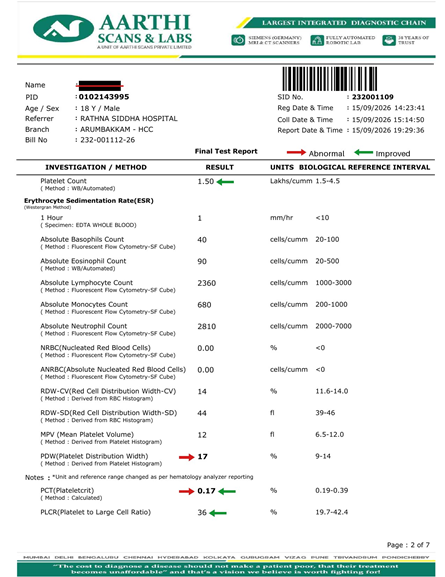
On the fourth day the report carried a number the family had been praying for: Nirmal’s platelets had reached the lower limit of normal. The first full panel of tests since the opening day gave a second kind of reassurance — the body’s inflammation was cooling fast.
Proof from the blood report
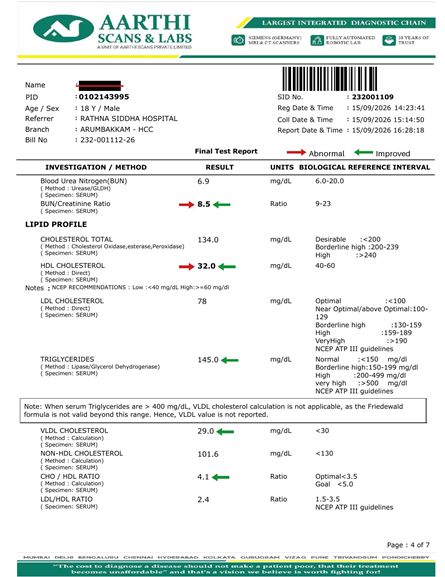
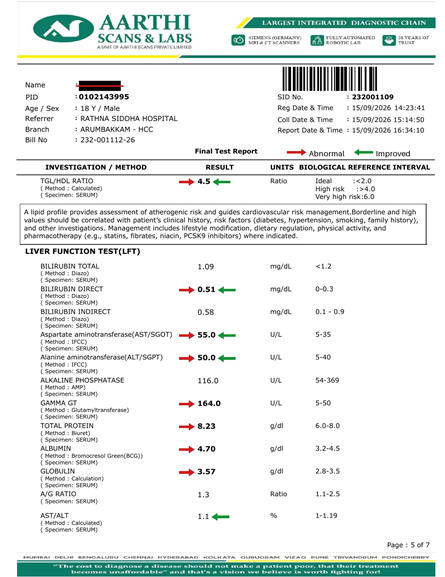
- Platelets 1.50 lakh/cumm (1,50,000) — exactly at the lower reference limit; the count had risen almost tenfold from 16,000 in three days.
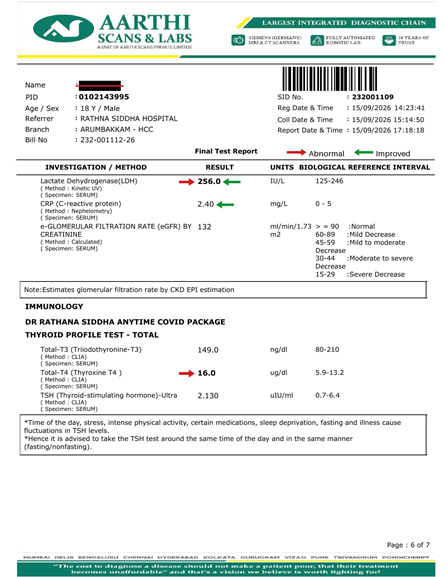
- CRP fell from 10.9 to 2.40 mg/L — inside the normal range (0–5) for the first time.
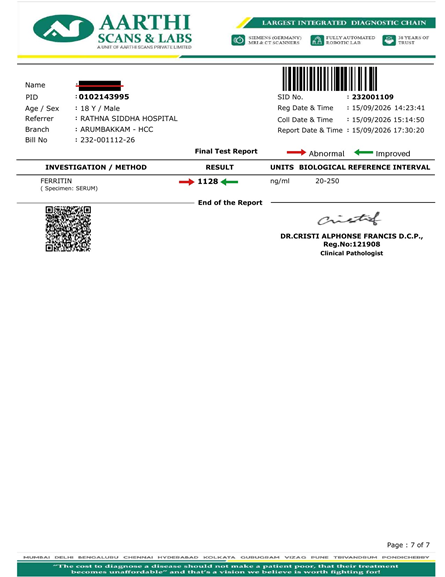
- Ferritin 2,695 → 1,128 ng/mL; LDH 327 → 256 IU/L — less than half the opening ferritin in three days.
- AST 76 → 55; HDL 17 → 32; triglycerides 256 → 145 — the metabolic and liver picture was already repairing.
- One number moved the wrong way: D-dimer 2,917 ng/mL — higher than 2,250 on Day 1. It is reported here honestly; by the next report it had fallen to 306.
CHAPTER 4 · VICTORY — AND A WATCHFUL EYE
3,96,000 — the Villain Defeated
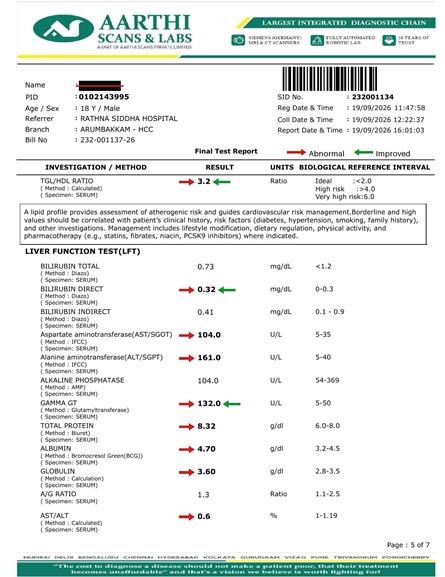
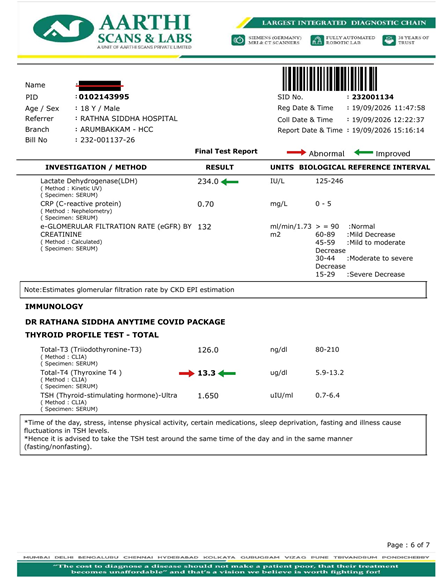
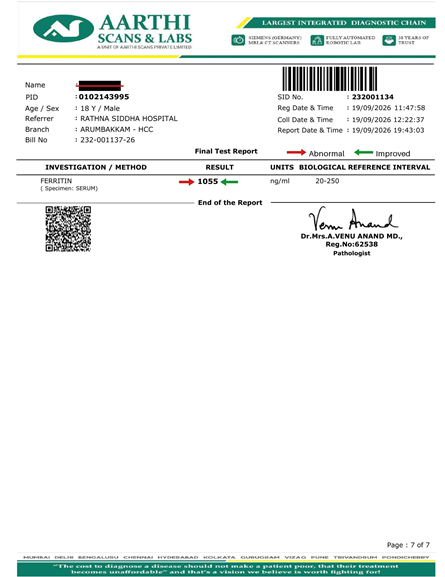
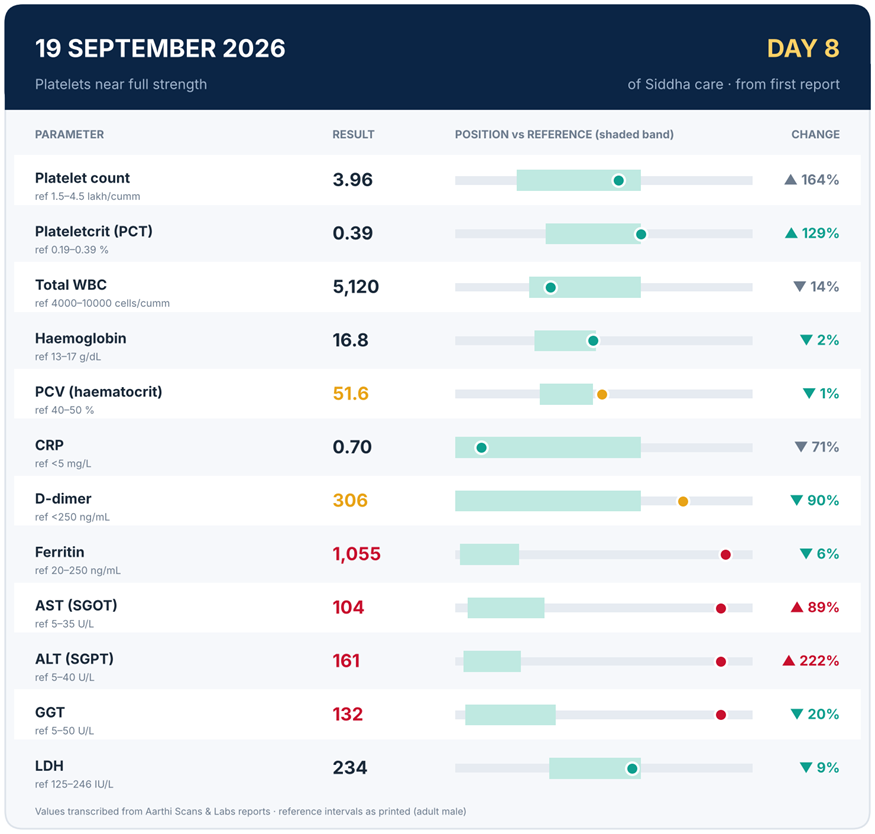
DAY 8 · 19 September 2026
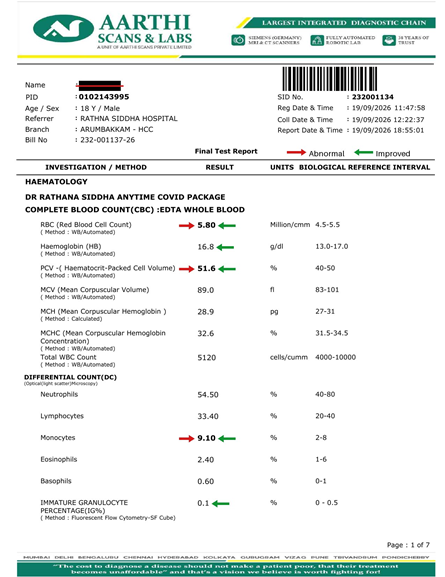
Four days later the picture looked like a different patient. Platelets had climbed to the middle of the normal range. The clotting marker that had alarmed everyone — D-dimer — had collapsed. For the first time the report read like that of a healthy young man.
But the same report carried one honest note: the liver enzymes had risen. This is common as dengue recedes, and it was precisely why the doctors kept checking.
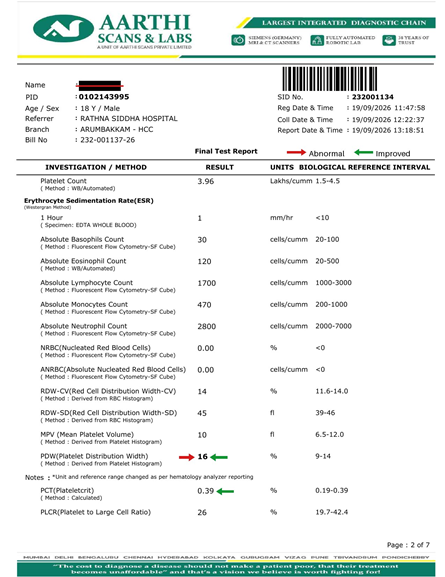
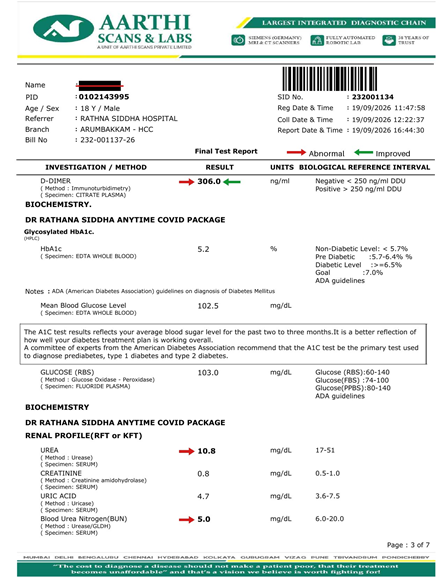
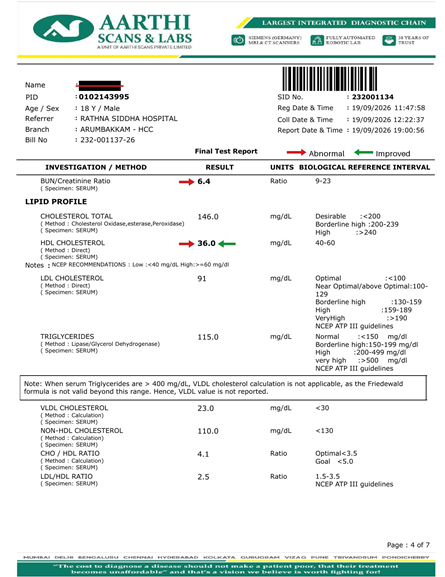
Proof from the blood report
- Platelets 3.96 lakh/cumm (3,96,000) — normal range 1.5–4.5; plateletcrit 0.39 %, at the top of its range.
- D-dimer 2,917 → 306 ng/mL — a 90 % fall; CRP 0.70 mg/L; white cells 5,120 and haemoglobin 16.8, both normal.
- Ferritin 1,055 ng/mL — roughly 60 % lower than Day 1 but still above its 20–250 range.
- Liver enzymes peaked: AST 104, ALT 161 U/L — higher than on Day 4 — the one number on the page that needed continued care. GGT, however, had fallen to 132.
CHAPTER 5 · STRENGTH RETURNS
4,15,000 — and Everything Falling into Place
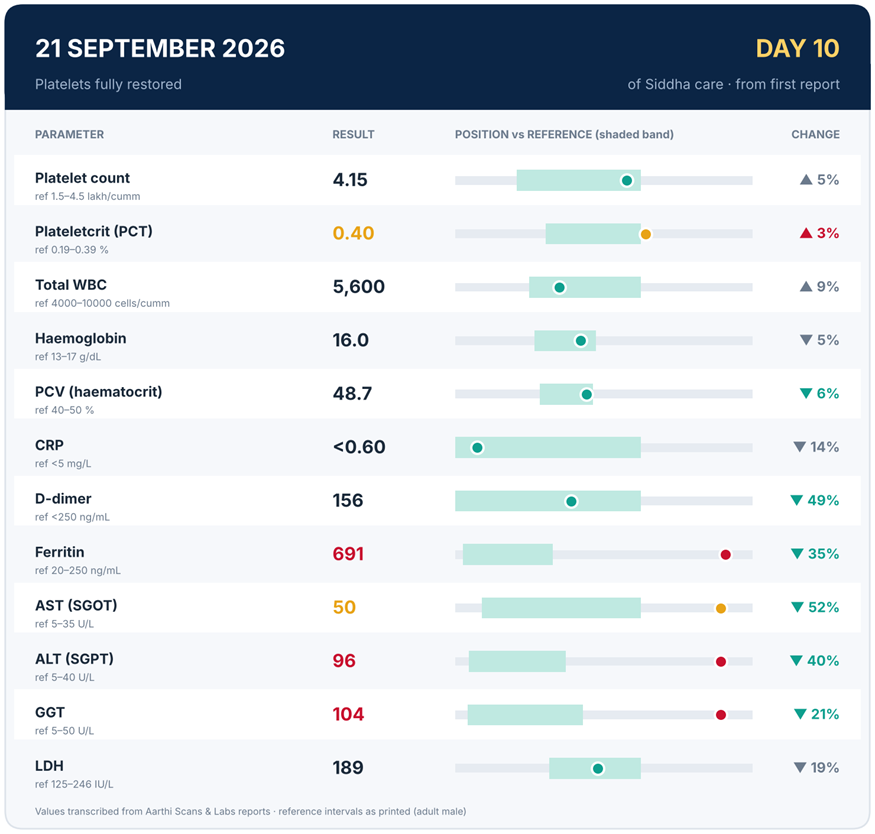
DAY 10 · 21 September 2026
Two days later, the liver numbers began to turn too. The report was now more green than red.
Proof from the blood report
- Platelets 4.15 lakh/cumm (4,15,000) — the highest count recorded, within the normal range; PCT 0.40 % (just above the 0.39 % printed limit).
- D-dimer 156 ng/mL — below the 250 line — the clotting marker had returned to normal.
- PCV 48.7 % and haemoglobin 16.0 g/dL — normal; the blood was no longer thick. CRP <0.60 mg/L.
- AST 50, ALT 96, GGT 104 U/L — all falling from the peak (104 / 161 / 132); LDH 189 IU/L, normal.
- Ferritin 691 ng/mL — down 74 % from 2,695.
CHAPTER 6 · GUARDING THE LIVER
A Quiet Check on the Liver
DAY 11 · 22 September 2026
The next day only the liver and ferritin were checked. It was a small report, but it answered the one remaining question: was the liver recovering?
Proof from the blood report
- AST 43, ALT 78, GGT 98 U/L — each lower than the day before (50 / 96 / 104).
- Ferritin 583 ng/mL — down from 691 the day before.
- Bilirubin normal (total 0.66 mg/dL) — showing the liver was handling its main work.
CHAPTER 7 · THE HERO STANDS
Fourteen Days Later
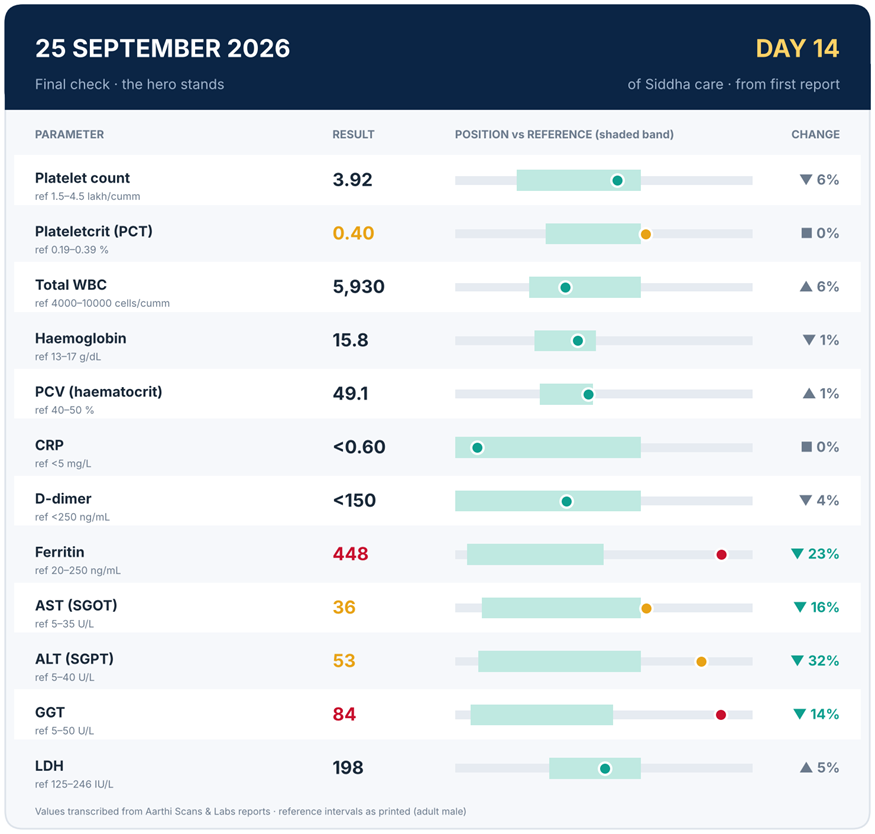
DAY 14 · 25 September 2026
The last report in this file is the most complete. It does not hide the remaining numbers — but it shows a young man whose blood, kidneys, sugar and thyroid are all in order, and whose platelet count had stayed in the normal range for a week.
Proof from the blood report
- Platelets 3.92 lakh/cumm (3,92,000) — stable and normal six days after reaching 3.96 lakh — the recovery had held. Plateletcrit 0.40 %.
- Inflammation and clotting normal — CRP <0.60 mg/L, D-dimer <150 ng/mL, ESR 2 mm/hr, LDH 198 IU/L.
- AST 36 (just above 35), ALT 53, GGT 84 U/L — all clearly lower, but not yet fully normal. Ferritin 448 ng/mL, down from 2,695.
- Rest of the check-up healthy — creatinine 0.8, urea 11.7, eGFR 132, random glucose 85, HbA1c 5.1 %, TSH 2.12, lipids HDL 42 / triglycerides 124 (HDL was 17 on Day 1).
THE PROOF TABLE
All Seven Reports at a Glance
| Parameter | Unit | Reference | 12 Sep | 14 Sep | 15 Sep | 19 Sep | 21 Sep | 22 Sep | 25 Sep |
| Platelets | lakh/cumm | 1.5–4.5 | 0.16 | 0.71 | 1.50 | 3.96 | 4.15 | — | 3.92 |
| Plateletcrit | % | 0.19–0.39 | 0.02 | 0.08 | 0.17 | 0.39 | 0.40 | — | 0.40 |
| Total WBC | cells/cumm | 4000–10000 | 11,680 | 6,900 | 5,980 | 5,120 | 5,600 | — | 5,930 |
| Haemoglobin | g/dL | 13.0–17.0 | 19.6 | 16.7 | 17.2 | 16.8 | 16.0 | — | 15.8 |
| PCV | % | 40–50 | 58.8 | 50.9 | 52.2 | 51.6 | 48.7 | — | 49.1 |
| CRP | mg/L | 0–5 | 10.90 | — | 2.40 | 0.70 | <0.60 | — | <0.60 |
| D-dimer | ng/mL | <250 | 2,250 | — | 2,917 | 306 | 156 | — | <150 |
| Ferritin | ng/mL | 20–250 | 2,695 | — | 1,128 | 1,055 | 691 | 583 | 448 |
| AST (SGOT) | U/L | 5–35 | 76 | — | 55 | 104 | 50 | 43 | 36 |
| ALT (SGPT) | U/L | 5–40 | 62 | — | 50 | 161 | 96 | 78 | 53 |
| Gamma-GT | U/L | 5–50 | 163 | — | 164 | 132 | 104 | 98 | 84 |
| LDH | IU/L | 125–246 | 327 | — | 256 | 234 | 189 | — | 198 |
| HDL cholesterol | mg/dL | 40–60 | 17 | — | 32 | 36 | — | — | 42 |
| Triglycerides | mg/dL | <150 | 256 | — | 145 | 115 | — | — | 124 |
CONCLUSION
Epilogue: The Hero Stands
On 12 September the report showed a young boy, whose platelets were one-tenth of normal, whose blood was thick, whose inflammation and clotting markers were far above range and who was already carrying the burden of a night in intensive care. Fourteen days later the same laboratory printed a platelet count of 3,92,000, CRP below 0.60, D-dimer below 150, kidney, sugar and thyroid results within range — and liver enzymes that were still settling.
For the family who waited, those numbers were never only numbers. They were the day the count crossed 1,50,000, the day D-dimer fell from 2,917 to 306, the day a bright young man could once again think about the future rather than the next blood test. Through all of it, Rathna Siddha Hospital stood beside young boy — from the herbal juice given before the ambulance left, through supervised Siddha treatment and diet, to the steady sequence of reports that let everyone see recovery happening.
The record shows the villain(dengue) retreating, day by day, while the hero (Siddha Tamil traditional medicine) stayed at the bedside.
PROOF
Appendix: The Original Report Pages
Every number in this story can be checked on these pages. Patient name is masked on the reports.Report 1 · 12 Sep 2026
Report 2 · 14 Sep 2026
Report 3 · 15 Sep 2026
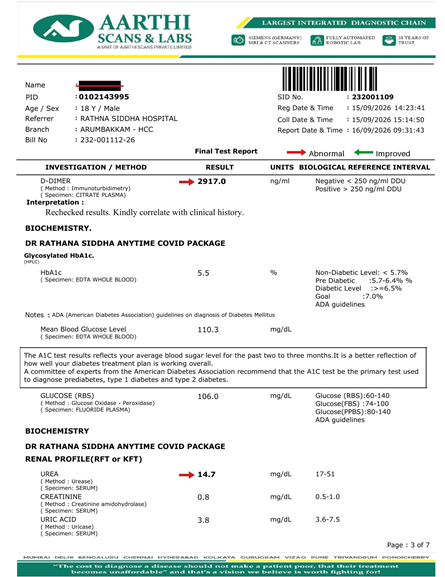
Report 4 · 19 Sep 2026